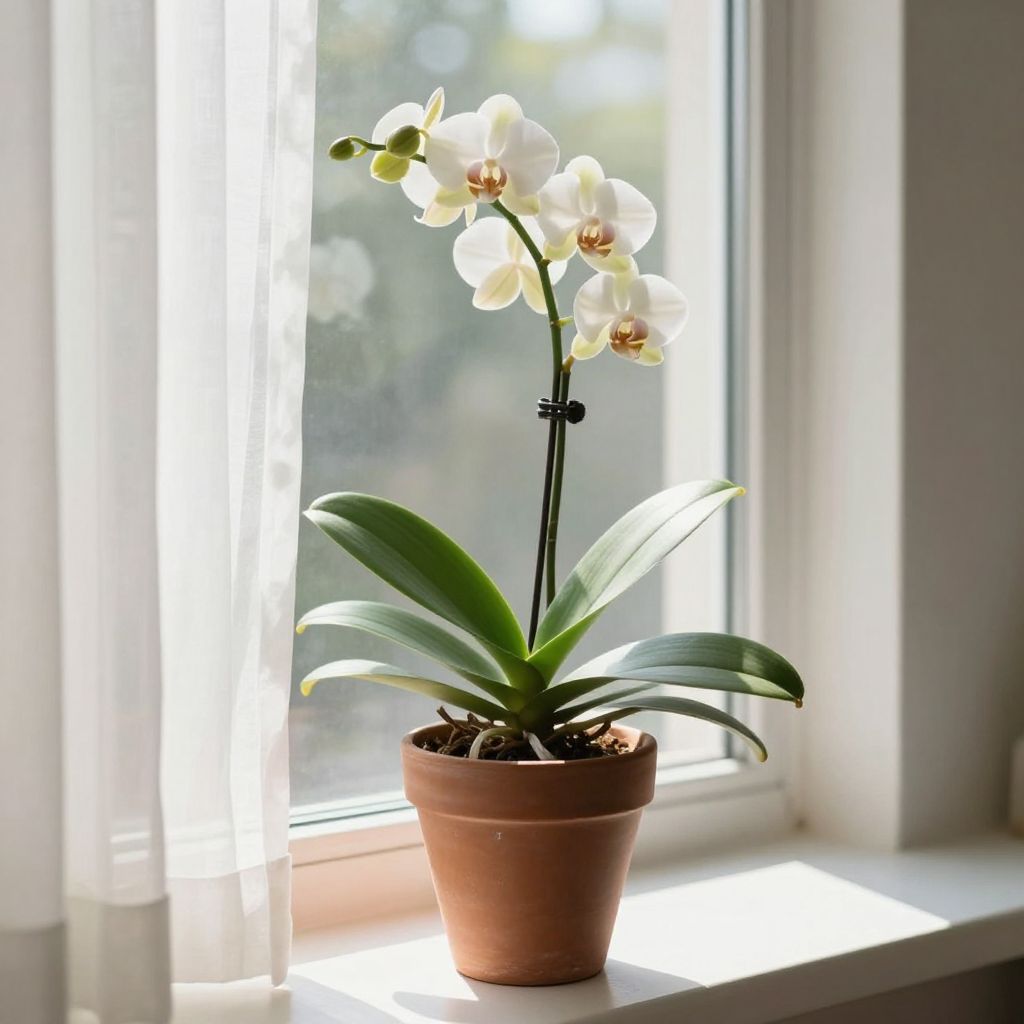
Do orchids need sunlight? Yes—but usually not direct, harsh sun. Most common house orchids grow best in bright, indirect light that mimics the filtered light they’d get under trees in nature. Too little light can stop flowering, while too much sun can scorch leaves quickly.
The right light depends on the orchid type, where it’s grown, and the season. If you learn how to read the leaves and place the plant correctly, you can keep orchids healthy and encourage repeat blooming without guesswork.
Do orchids need sunlight?
Orchids need light to make energy and bloom, but most popular types prefer bright, indirect sunlight rather than direct midday sun. An east window is often ideal indoors, while a shaded south or west exposure can work with a sheer curtain. The goal is enough light for flowering without leaf burn.
How much light orchids really need
Different orchids have different light needs, but most home-grown orchids fall into the low-to-medium light range. Phalaenopsis, the common moth orchid, usually needs less light than Cattleya, Oncidium, or Vanda types.
General light levels by type
- Low to medium light: Phalaenopsis, Paphiopedilum
- Medium to bright light: Cattleya, Oncidium, Dendrobium
- Very bright light: Vanda and some other sun-loving orchids
If you are not sure what orchid you have, start with bright filtered light and watch the leaves. That is usually safer than placing it in strong direct sun right away.
What “bright, indirect light” means
Bright, indirect light means the plant gets plenty of illumination, but the sun’s rays are softened before they reach the leaves. Think of light near a window with a sheer curtain, or in a spot where the plant receives morning sun but is shaded later in the day.
Indoors, a room that feels bright enough to read in during the day is often a good starting point. Outdoors, orchids usually need protection from direct afternoon sun, especially in warm climates.
Signs your orchid is getting the right amount of sunlight
Orchids often tell you what they need through their leaves and flowering habits. Healthy light exposure usually produces firm, medium-green leaves and steady growth.
Too little light
- No blooms or very weak flowering
- Dark green, floppy leaves
- Slow growth
- Long gaps between blooms
Dark green leaves can look healthy, but in many orchids they often mean the plant is not getting enough light to flower well.
Too much light
- Yellowing or bleached patches on leaves
- Brown, dry scorch marks
- Leaves that feel hot in the afternoon sun
- Wrinkling or stress after sudden exposure
Scorch damage does not heal. Once leaves are burned, the damaged tissue stays damaged, so prevention matters more than treatment.
Best places to grow orchids indoors
For most orchids, the best indoor location is a window with strong light but limited direct sun. The exact spot depends on the season, your window direction, and how intense the sun is where you live.
Window direction guide
- East-facing window: Often ideal for many orchids; gentle morning sun is usually safe.
- South-facing window: Can be excellent if filtered with a sheer curtain or set back from the glass.
- West-facing window: Often too intense in the afternoon unless shaded.
- North-facing window: May be too dim for flowering unless the room is very bright or supplemented with grow lights.
In winter, orchids can usually tolerate more direct sun because the light is weaker. In summer, the same window may become too intense and require shading or moving the plant farther from the glass.
Using grow lights
If your home is dim, a grow light can help orchids bloom more reliably. Choose a light that provides bright, even coverage and place it at a distance that prevents heat stress.
- Keep the light on for a consistent daily cycle.
- Adjust height if leaves bleach or the plant stretches toward the light.
- Use the plant’s response, not just the label, to fine-tune placement.
Can orchids grow outdoors in sunlight?
Yes, many orchids can grow outdoors in warm weather, but they still need protection from direct sun, wind, and heavy rain. Outdoors, the main challenge is often stronger light than the plant is used to indoors.
Outdoor light tips
- Place orchids under shade cloth, a tree canopy, or a covered patio.
- Avoid sudden moves from indoor light to full outdoor sun.
- Protect plants from hot afternoon exposure, especially in dry climates.
- Bring tender orchids in before cool nights if your climate is not suitable.
If you move an orchid outside for the season, acclimate it gradually over one to two weeks. Start in deep shade, then increase light slowly so the leaves can adapt.
How to tell if your orchid is getting enough light
Instead of guessing, check the plant regularly. Orchid leaves, root growth, and flowering are the best clues.
Simple light check
- Look at the leaves in natural daylight.
- Note the color: medium green is often a good sign.
- Check whether the plant is producing new leaves or roots.
- Watch for flower spikes during the expected blooming season for that type.
Some growers use the “hand shadow” test: if your hand makes a soft, blurry shadow near the plant, the light is often in the right range for many orchids. A very sharp, dark shadow usually means the light may be too strong for shade-loving types.
Common mistakes with orchid sunlight
Most orchid light problems come from either too much direct sun or too little light for too long. Both can be corrected, but slowly.
Common errors to avoid
- Putting orchids in a hot windowsill with no filtering
- Moving a plant from low light to full sun overnight
- Assuming all orchids need the same light
- Keeping a plant in a dim corner because it looks “safe”
- Ignoring seasonal changes in sun angle and intensity
If your orchid is not blooming, light is one of the first things to review. Many healthy-looking orchids simply do not get enough brightness to set flower spikes.
What to do if your orchid gets too much sun
If you notice scorch or bleaching, move the orchid out of direct sun at once. Then give it stable conditions and avoid extra stress while it recovers.
Recovery steps
- Relocate the plant to bright, filtered light.
- Remove only fully dead tissue if needed; do not cut healthy green areas.
- Keep watering consistent, but do not overwater to “help” the plant.
- Wait for new growth to judge recovery.
Damaged leaves may remain on the plant for a long time because they still help with photosynthesis. If the plant has enough healthy tissue left, it can recover and bloom again later.
What to do if your orchid is not getting enough light
If your orchid is dark green, growing slowly, and refusing to bloom, increase light gradually. A brighter window, a better shelf position, or a grow light can make a big difference.
Safe ways to increase light
- Move it closer to a bright window, but not against hot glass.
- Remove heavy curtains or replace them with sheer fabric.
- Rotate the pot occasionally so growth stays even.
- Use supplemental lighting if natural light is limited.
Do not jump straight from shade to strong sun. Increase exposure over several days or weeks so the leaves can adapt without burning.
Light, watering, and potting go together
Sunlight affects how quickly an orchid uses water. A brighter plant usually dries faster than one in lower light, so light and watering should be adjusted together.
Why this matters
- More light often means faster drying and more active growth.
- Less light usually means slower drying and a greater risk of overwatering.
- Poor drainage becomes even more dangerous when the plant is weak from low light.
Use a well-draining orchid mix rather than regular potting soil. Most orchids need air around the roots, and a heavy mix can stay wet too long, especially if the plant is also receiving low light.
Seasonal care tips for orchid light
Seasonal changes matter even indoors. The sun’s angle shifts, day length changes, and windows can become much brighter or dimmer over the year.
Spring and summer
- Watch for stronger afternoon sun.
- Use shade cloth or a sheer curtain if leaves begin to pale.
- Check moisture more often because brighter light can speed drying.
Fall and winter
- Move plants closer to the brightest available window if needed.
- Clean windows so light is not blocked by dust or grime.
- Be careful with cold glass and drafts near the plant.
In many homes, winter is the easiest time to give orchids better light without scorching them, especially in northern climates where the sun is weaker.
Conclusion: give orchids bright, filtered light
So, do orchids need sunlight? Yes, but most need bright, indirect light rather than full direct sun. Start by placing your orchid near a suitable window, then watch the leaves and flowering response to fine-tune the spot.
If you want to improve orchid care further, look into related topics such as choosing the right orchid potting mix and matching indoor plants to window light for healthier growth and better blooms.