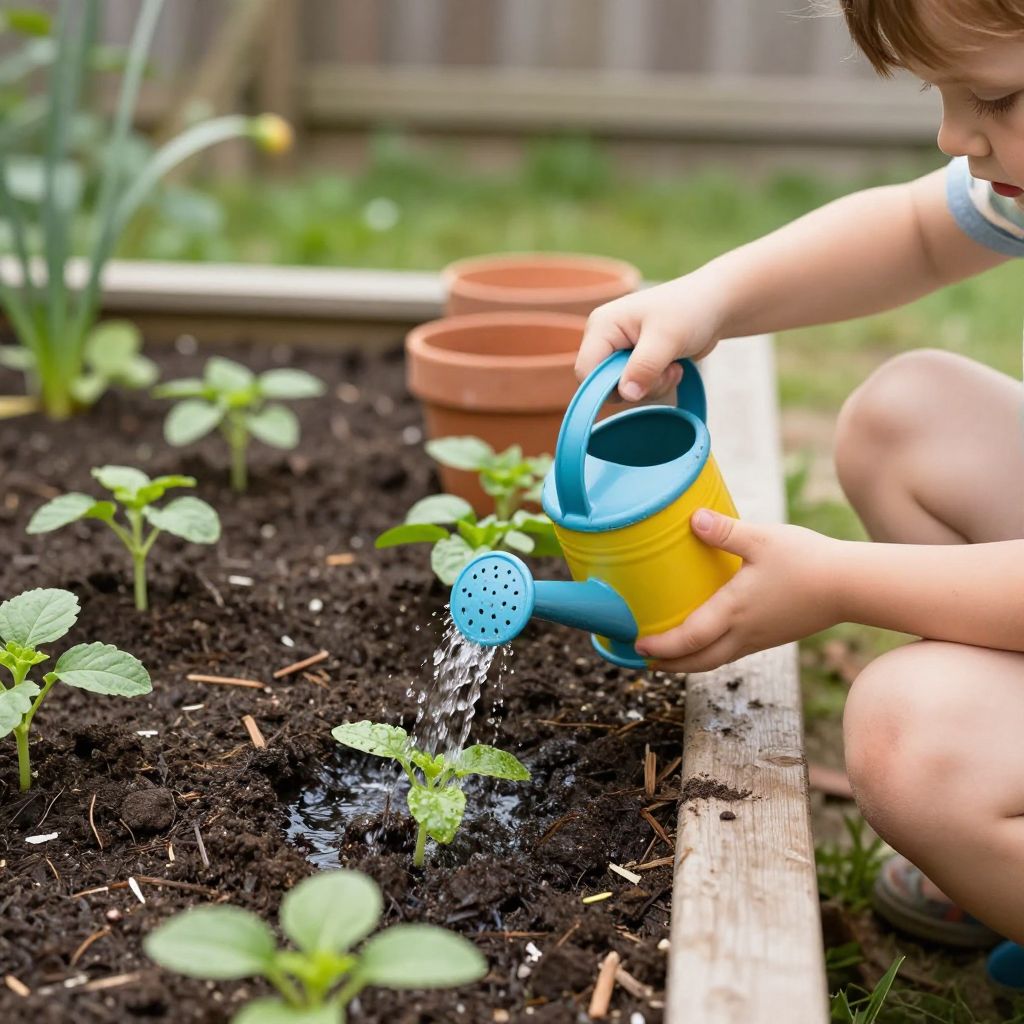
Looking for a kids watering can that actually helps children water plants without making a mess? The best choice is light, easy to grip, and sized for small hands, but it should also pour gently enough for seedlings and container plants.
Used well, a child-sized watering can can teach real gardening habits: how to check soil moisture, water at the base of plants, and avoid overwatering. It is a simple tool, but the right design makes gardening safer, easier, and much more enjoyable for young helpers.
What is a kids watering can, and how do you use it well?
A kids watering can is a small, lightweight watering tool designed for children to carry, fill, and pour with control. Use it to water pots, seedlings, borders, and raised beds slowly at the soil line. The goal is even moisture, not soaking leaves or flooding the bed.
Choosing the right kids watering can
Not all small watering cans are equally useful. The best one is balanced when full, easy to hold with one hand, and sturdy enough to survive being dropped on a patio or lawn.
What to look for
- Light weight: A child should be able to lift it when full without straining.
- Comfortable handle: A rounded or double handle is easier for small hands.
- Gentle spout or rose: A fine sprinkler attachment helps avoid washing soil away.
- Stable shape: A wider base is less likely to tip over when set down.
- Durable material: Plastic is usually lighter; metal can last longer but may be heavier.
Size matters more than style
A can that is too large encourages spills and awkward lifting. For most children, a smaller capacity is more practical than a decorative oversized can, because it keeps watering controlled and reduces fatigue.
If you are buying for mixed ages, choose a model that a younger child can manage when partly filled. You can always refill it more often, which is better than letting a child struggle with a heavy container.
How to teach a child to water plants correctly
Start with a simple routine. Show your child how to check the soil first, aim at the base of the plant, and pour slowly until the water begins to soak in rather than run off.
- Touch the soil with a finger about 2–5 cm deep.
- If it feels dry at that depth, watering is likely needed.
- Fill the can only partway if the child is young or the path is uneven.
- Pour near the roots, not from above the leaves.
- Pause if water starts pooling on the surface.
This method helps children learn that plants do not need constant watering. It also teaches observation, which is one of the most valuable gardening skills they can develop.
Good habits to build early
- Water in the morning when possible, especially outdoors in warm weather.
- Use slow, steady pours instead of a fast splash.
- Check the soil before watering every time.
- Empty the can after use so it does not become heavy, dirty, or stagnant.
Best plants and garden areas for a kids watering can
Children do best watering plants that are easy to reach and forgiving if they get a little extra water. Container plants, herb pots, seedlings, and newly planted flowers are usually the easiest starting points.
Great beginner watering targets
- Patio containers and window boxes
- Raised beds with clear edges
- Seed trays and young transplants
- Thirsty annuals in warm weather
- Small vegetable plants that need regular moisture
Large shrubs, mature trees, and wide borders usually need deeper, less frequent watering than a child-sized can can provide. For those areas, use the kids watering can as a teaching tool, not the only watering method.
Indoor versus outdoor use
Indoors, a small watering can is especially useful for houseplants and seedlings because it reduces spills on floors and furniture. Outdoors, it is ideal for short watering jobs, but you may need a hose or larger can for bigger beds in hot weather.
How much water should a child give?
There is no universal amount, because plant size, pot size, soil type, sun exposure, and weather all change how quickly moisture is used. The best rule is to water until the root zone is evenly moist, not muddy.
For containers, water until a little drains from the bottom, then stop. For garden beds, water slowly so it has time to soak in. Sandy soil drains quickly and may need more frequent watering, while clay soil holds water longer and can become waterlogged if overdone.
Signs a plant needs water
- Topsoil feels dry and crumbly
- Leaves look slightly wilted or dull
- Small pots feel unusually light
- New transplants dry out faster than established plants
Signs of overwatering
- Soil stays wet for long periods
- Water sits on the surface instead of soaking in
- Leaves yellow or drop even though the soil is wet
- Potting mix smells sour or stale
Overwatering is one of the most common mistakes children make when they are eager to help. Teach them that plants need water only when the soil says so, not just because the garden looks dry on top.
Common mistakes with a kids watering can
Most problems come from enthusiasm, not bad intentions. A child may pour too quickly, water the wrong place, or keep watering even when the soil is already moist.
How to fix them
- Fast pouring: Show a slow count of three while pouring.
- Watering leaves only: Point out the roots are where water is absorbed.
- Using too much water: Fill the can less and make more trips if needed.
- Ignoring soil conditions: Make soil-checking part of the routine.
- Spilling on paths: Practice on a lawn or mulch area first.
If a child repeatedly waters the same plant too much, move them to a smaller task, such as watering one pot at a time. Clear boundaries make success easier and reduce plant stress.
Seasonal watering tips for young gardeners
Watering needs change through the year, so the same routine will not work every season. Children can learn to notice those changes if you point them out.
Spring
Young plants and seedlings may need regular moisture, especially in windy or sunny spots. Spring rains may reduce the need to water, so check the soil before filling the can.
Summer
Heat, wind, and strong sun dry soil quickly. Water early in the day when possible, and pay special attention to containers, which can dry out much faster than garden beds.
Autumn
Many plants need less water as growth slows, but newly planted shrubs, bulbs, and cool-season vegetables may still need attention. Rainfall often increases, so avoid watering on a fixed schedule.
Winter
Outdoor watering is often minimal, but evergreen plants, sheltered pots, and indoor plants may still need occasional moisture. Indoors, heating systems can dry the air and the potting mix more quickly than you expect.
Helping kids use a watering can safely
Safety is simple but important. A full can can be slippery, and wet paths can become hazardous, especially for younger children.
- Keep walkways clear before watering.
- Use a can that is light enough to carry without leaning backward.
- Teach children to walk, not run, while carrying water.
- Store the can where it will not collect rainwater or become a tripping hazard.
For very young children, supervise closely and let them water one plant at a time. The task should feel manageable, not exhausting.
Cleaning and maintaining a kids watering can
A clean watering can works better and lasts longer. Dirt, algae, and mineral buildup can clog the spout and make pouring uneven.
- Empty leftover water after each use.
- Rinse out soil or debris from the can and spout.
- Let it dry upside down if possible.
- Check for cracks, loose handles, or blocked holes in the rose.
If the can is used for indoor plants, cleaning matters even more because standing water can smell stale and attract algae. A quick rinse is usually enough for routine care.
Turning watering into a useful gardening lesson
A kids watering can is more than a toy. It is a practical tool that can help children understand plant needs, soil moisture, and the difference between helpful care and too much attention.
Let children compare dry and moist soil, watch how water moves through mulch, and notice how different plants drink at different rates. Those small observations build confidence and make gardening more meaningful.
If you want to keep building those habits, choose one small plant or container bed as your child’s regular watering job and review it together each week. That simple routine is often the best way to grow skill, care, and interest in the garden.
Leave a Reply