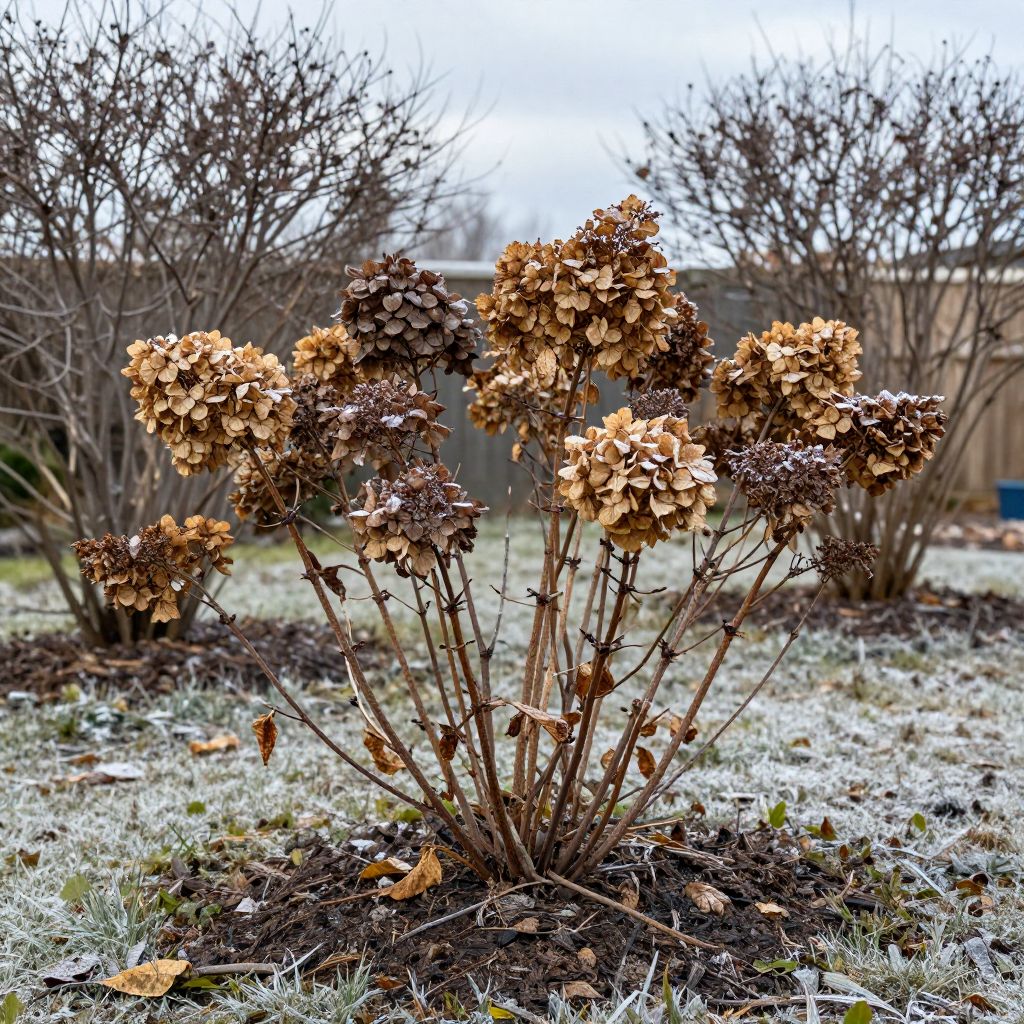
What do hydrangeas look like in the winter? In most gardens, they turn into a mix of dried flower heads, bare stems, and woody shrubs with a quieter, more structural look. Some varieties keep papery blooms and seed heads through cold weather, while others look mostly dormant until spring.
That winter appearance is normal. What you see depends on the hydrangea type, your climate, whether you pruned in fall, and how much wind, snow, or frost the plant has faced.
What do hydrangeas look like in the winter?
In winter, hydrangeas usually look dormant: leafless stems, brown or tan canes, and often dried flower heads that may remain on the plant. Bigleaf and oakleaf hydrangeas often keep old blooms, while panicle hydrangeas may hold cone-shaped flower heads that fade to beige. The plant is alive, just resting.
Why hydrangeas look different in winter
Hydrangeas do not all behave the same way once temperatures drop. The winter look depends on species, bloom type, and how exposed the shrub is to weather.
Common winter appearance by hydrangea type
- Bigleaf hydrangea (Hydrangea macrophylla): often has dried mophead or lacecap flowers left on the stems, though cold can blacken buds and stems.
- Oakleaf hydrangea (Hydrangea quercifolia): may keep tan flower clusters and attractive peeling bark, plus some dried leaves in mild climates.
- Panicle hydrangea (Hydrangea paniculata): usually shows sturdy, cone-shaped dried flower heads that persist well into winter.
- Smooth hydrangea (Hydrangea arborescens): often looks like bare stems by late winter unless you leave some dried heads for structure.
In colder regions, snow and ice can flatten stems or snap old blooms off. In milder areas, hydrangeas may keep a more decorative winter silhouette.
What you should expect to see on the plant
Winter hydrangeas are usually not lush or leafy. Instead, you may notice a few key features that help you tell the plant is healthy and dormant rather than dead.
- Woody stems that may be tan, gray, or brown.
- Dried flower heads that feel papery or brittle.
- Leafless canes after frost has dropped the foliage.
- Bud nodes along the stems, depending on the species.
- Some winter damage such as blackened tips, especially after hard freezes.
A healthy dormant hydrangea should still have firm stems, not mushy or collapsing ones. If the shrub looks dry and brown aboveground, that does not always mean it is dead.
How to tell if your hydrangea is alive in winter
If you are unsure whether your hydrangea survived the cold, check for living tissue before you prune heavily or dig it up.
- Gently scratch a small section of bark with your fingernail or a clean pruner blade.
- Look for green or moist tissue underneath the outer layer.
- Check several stems, starting near the base and moving upward.
- Wait until late winter or early spring if you are not sure, because some stems may look dead but still resprout.
Do not rush to cut everything back in fall. On many hydrangeas, old stems can help protect buds from winter injury and give the shrub a more attractive cold-season shape.
Should you prune hydrangeas in winter?
Sometimes yes, but only if you know which hydrangea you have. Pruning at the wrong time can remove flower buds and reduce blooming the following season.
General winter pruning guidance
- Panicle hydrangeas can usually be pruned in late winter or early spring because they bloom on new wood.
- Smooth hydrangeas also bloom on new wood and can be cut back in late winter if needed.
- Bigleaf and oakleaf hydrangeas often bloom on old wood, so winter pruning can remove next season’s flowers.
If you are unsure of the type, wait until spring growth starts. Then remove only clearly dead wood and any stems that are broken, crossing, or diseased.
How winter weather changes the look of hydrangeas
Cold, wind, and moisture all affect how hydrangeas appear in winter. The same shrub can look tidy in one yard and rough in another.
Cold and frost
Frost can turn leaves brown and make flower heads collapse. Repeated freeze-thaw cycles may split stems or damage tender buds, especially on bigleaf hydrangeas.
Snow and ice
Heavy snow can bend stems to the ground, but it can also insulate the plant. Ice is more damaging because it adds weight and can snap stems or break old blooms.
Wind
Wind dries out canes and can strip away remaining leaves or flower heads. Shrubs planted in exposed spots often look more ragged by midwinter.
Winter care tips to keep hydrangeas healthy
Even though hydrangeas are dormant, a few simple maintenance steps can improve how they look now and how they perform in spring.
Protect the root zone
- Add a 2- to 4-inch layer of mulch around the base, keeping it a few inches away from stems.
- Use shredded bark, pine needles, leaf mold, or composted leaves where appropriate.
- Mulch helps moderate soil temperature and reduce freeze-thaw stress.
Water before the ground freezes
If autumn or early winter has been dry, give the shrub a deep watering before the soil freezes. Hydrangeas prefer consistent moisture, and dry roots can suffer in winter wind and sun.
Once the ground is frozen, watering is usually not useful unless you are in a mild climate with unfrozen soil and a long dry spell.
Leave some stems for structure
Many gardeners leave dried flower heads and stems through winter because they add interest and may help shield buds. You can clean up later, once you know what winter damage occurred.
How to handle winter damage
Winter damage is common, especially in colder climates or after an unusually harsh cold snap. The goal is to remove only what is clearly damaged and avoid overpruning.
What to cut
- Dead, brittle stems that snap easily.
- Broken branches from snow or ice.
- Stems with obvious disease or rot.
- Blackened tips after cold injury, if the damage is clearly dead.
What to leave
- Stems with green tissue beneath the bark.
- Old flower heads if you like the winter look and they are not causing problems.
- Healthy canes until you can see where new growth begins.
Use clean, sharp pruners and make cuts just above a healthy bud or at the base of a dead stem. If several stems are damaged, stagger your cuts so you do not remove too much at once.
Common winter problems and what they mean
Some winter changes are normal, but a few signs suggest the plant needs attention.
Blackened buds or stems
This often points to frost damage. On old-wood bloomers, it may mean fewer flowers in spring.
Collapsed stems
Snow load, ice, or weak growth can cause stems to flop or break. Gentle cleanup is usually enough unless the base is damaged.
No visible buds
Some hydrangeas hide buds well in winter, so absence of obvious buds is not always a problem. Scratch test several stems before deciding the shrub is dead.
Signs of rot at the base
Soggy soil, poor drainage, or winter standing water can damage roots and crowns. If the base smells rotten or feels soft, improve drainage as soon as conditions allow.
How to improve winter appearance next year
If you want your hydrangeas to look better through winter, planning starts during the growing season.
- Plant in a site with morning sun and afternoon shade if your climate is hot, or in more sun where summers are cool.
- Avoid exposed, windy spots if winter damage is common in your area.
- Use well-drained soil enriched with compost, but do not let the crown sit in wet ground.
- Choose hydrangea types suited to your climate and bloom habit.
- Delay major pruning until you know whether the shrub blooms on old wood or new wood.
Good drainage matters year-round. Hydrangeas dislike waterlogged soil, and winter wetness can be just as harmful as winter cold in poorly drained beds.
Can you propagate hydrangeas in winter?
Winter is usually not the best time for most home gardeners to propagate hydrangeas outdoors. The plant is dormant, and cuttings root more reliably when the shrub is actively growing, depending on species and local conditions.
If you want to propagate, plan for softwood or semi-ripe cuttings at the right season rather than trying to force winter cuttings. For many gardeners, late spring through summer is the more practical window.
Winter landscaping value of hydrangeas
Even when they look dormant, hydrangeas still add shape to the garden. Their dried flower heads and branching structure can soften winter borders and provide a useful transition between evergreen plants and bare perennials.
They work especially well near evergreens, ornamental grasses, and shrubs with colored bark. In a mixed border, even a leafless hydrangea can help anchor the space until spring growth returns.
Conclusion: what to do now
If you are wondering what do hydrangeas look like in the winter, expect a dormant shrub with bare stems and possibly dried blooms, not a dead plant. Check the stems for living tissue, leave healthy growth in place, and wait until late winter or spring to prune based on the hydrangea type.
For more seasonal plant care, you may also want to read about how to prune hydrangeas correctly and winter mulching tips for shrubs to keep your garden looking its best through cold weather.