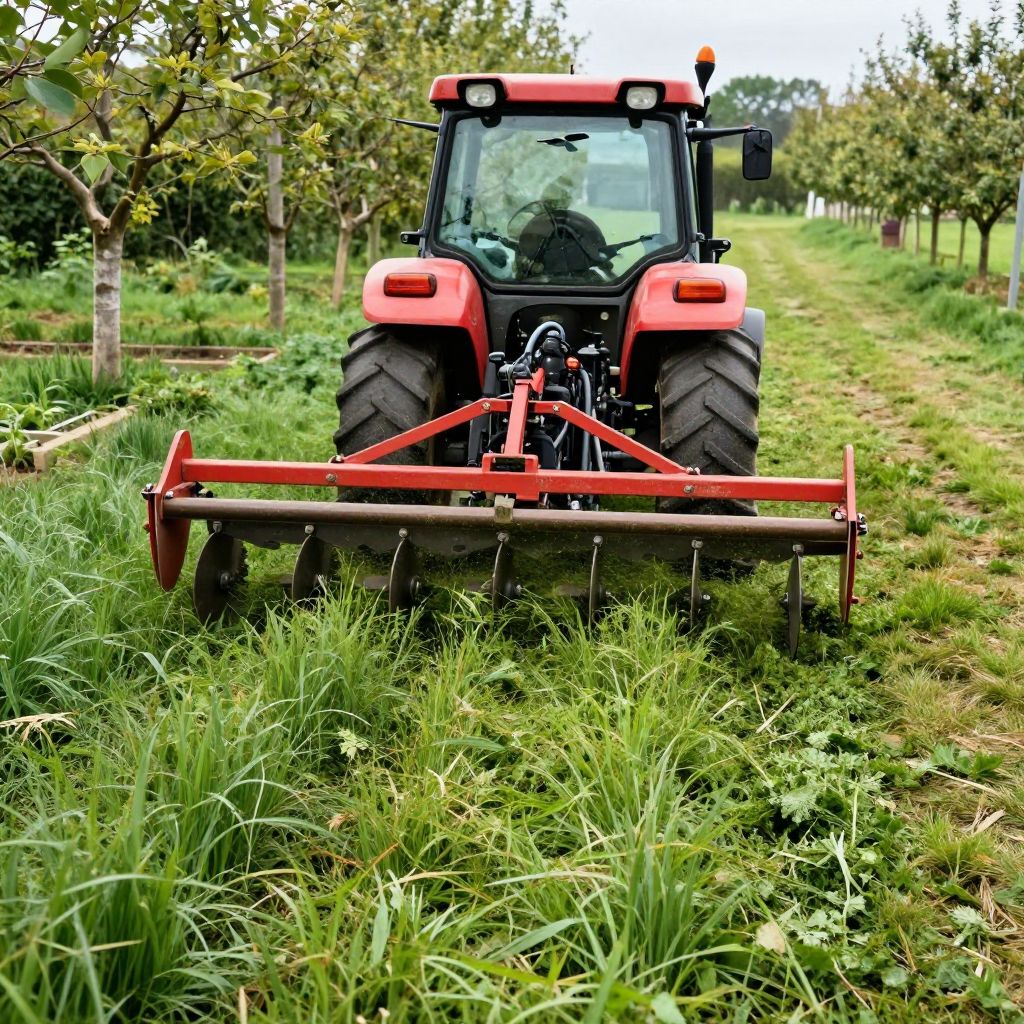
If you’re asking, “What is a flail mower?” you’re probably trying to figure out whether this machine is the right tool for rough grass, weeds, or neglected ground. A flail mower is a heavy-duty cutting machine that uses many small swinging blades attached to a rotating drum to chop vegetation into fine pieces.
It’s often chosen for tougher mowing jobs where a standard rotary mower may struggle, especially on uneven ground, roadside edges, orchards, field margins, and overgrown areas. Understanding how it works helps you decide when it’s useful, how to use it safely, and what kind of maintenance it needs.
What Is A Flail Mower?
A flail mower is a mower with a horizontal rotor fitted with small hinged blades, called flails, that spin at high speed and cut vegetation by impact. It is designed for rough grass, brambles, light brush, and uneven terrain. Compared with a rotary mower, it is usually safer around debris and gives a finer, more even mulch.
How a Flail Mower Works
Instead of one large spinning blade, a flail mower uses dozens of small cutting elements mounted around a drum. As the drum turns, the flails swing outward and strike the vegetation repeatedly, cutting it into smaller pieces.
This design gives you a few practical benefits:
- Better handling of rough growth than many domestic mowers.
- More even shredding of clippings, which can help them break down faster.
- Improved safety in some situations because the flails are less likely to throw large objects as far as a standard blade can.
- Good performance on uneven ground when fitted and used correctly.
Flail mowers are commonly mounted on tractors, compact utility tractors, skid steers, or purpose-built machines. Some lighter versions are used in landscaping and grounds maintenance, while larger models are used for agricultural and roadside work.
When Should You Use a Flail Mower?
Use a flail mower when the area is too rough, dense, or uneven for a regular lawn mower and you want a neat, chopped finish rather than a clean turf cut. It is especially useful for managing tall grass, weeds, saplings, and neglected margins.
Good situations for a flail mower
- Overgrown paddocks or field edges
- Orchard rows and vineyard alleys
- Roadside verges and drainage banks
- Rough grass around fences and boundaries
- Areas with light brush or woody stems, within the machine’s limits
When a flail mower may not be the best choice
- Fine lawn care where you want a very short, manicured finish
- Very wet ground that may rut or compact easily
- Areas with hidden rocks, wire, or heavy debris unless you have cleared them first
- Steep slopes beyond the machine’s safe operating range
Flail Mower vs Rotary Mower
If you’re deciding between mower types, the main difference is how they cut and what they handle best. A rotary mower uses one or two large blades, while a flail mower uses many small blades mounted on a drum.
Quick comparison
- Cut quality: Rotary mowers usually give a cleaner lawn finish; flail mowers give a chopped, mulched finish.
- Rough ground: Flail mowers generally handle rougher, denser growth better.
- Debris tolerance: Flail mowers are often preferred where hidden debris may be present, though you should still clear the area first.
- Maintenance: Flail mowers have more moving parts and need regular inspection.
If your goal is tidy turf, a rotary mower is often the better tool. If your goal is clearing and maintaining rough vegetation, a flail mower is usually the more practical choice.
Types of Flail Mowers
Not all flail mowers are built the same. The right type depends on your machine, the size of the area, and the kind of growth you need to cut.
Common flail styles
- Light-duty flail mowers: Best for grass and softer weeds on maintained ground.
- Medium-duty flail mowers: Suitable for thicker grass, rougher areas, and more frequent use.
- Heavy-duty flail mowers: Built for tougher vegetation, more demanding sites, and heavier workloads.
Common flail blade shapes
- Y-blades: Often used for grass and lighter brush; they can give a finer finish.
- Hammer flails: Heavier and better for tougher growth, though they may leave a rougher finish.
Manufacturers may use different names, so always check the machine’s intended use rather than relying on the blade shape alone.
How to Use a Flail Mower Safely
Safe use starts before you switch the machine on. A flail mower can be a very effective tool, but it should be treated as serious equipment, not a casual lawn mower.
- Walk the area first. Remove stones, wire, branches, toys, and other solid objects.
- Check the ground. Note holes, stumps, ditches, and hidden slopes.
- Inspect the mower. Look for worn flails, loose bolts, damaged guards, and low oil or grease points where relevant.
- Set the cutting height correctly. Start higher if the area is overgrown, then lower gradually if needed.
- Mow at a steady pace. Do not force the machine through thick growth too quickly.
- Overlap passes slightly. This helps avoid missed strips and uneven cutting.
Always keep bystanders, pets, and children well away while the machine is running. Wear suitable eye protection, sturdy footwear, hearing protection if needed, and close-fitting clothing that will not catch in moving parts.
How to Prepare an Overgrown Area Before Mowing
Preparation makes a big difference to the result and helps protect the machine. If the area has been neglected for a while, a little clearing first can save time and reduce damage.
Useful preparation steps
- Cut or remove very large woody stems by hand if they exceed the mower’s capability.
- Mark hazards such as rocks, irrigation fittings, posts, and shallow drains.
- Check for wildlife before mowing, especially in long grass and field edges.
- Avoid mowing when the ground is waterlogged, as this can create ruts and compact the soil.
If the vegetation is extremely tall, it may be better to take two passes: one high pass to knock it down, then a second pass at the desired height once the material has settled.
Maintenance and Care
Regular maintenance keeps a flail mower cutting well and reduces wear. Because the machine has many moving parts, small problems can turn into bigger ones if ignored.
Basic maintenance checklist
- Inspect flails for wear, cracks, or missing pieces.
- Check belts, chains, and drive components if your model uses them.
- Grease fittings according to the manufacturer’s schedule.
- Clean off wrapped grass and debris after use.
- Look for loose fasteners and tighten them as needed.
- Store the mower under cover where possible to reduce rust.
If the mower starts vibrating more than usual, stop and inspect it. Vibration can mean an unbalanced rotor, damaged flails, or a loose component, and continuing to use it can cause further damage.
Common Problems and How to Fix Them
Most flail mower problems are practical rather than mysterious. The key is to notice changes early and deal with them before they affect the cut or damage the machine.
Uneven cutting
This can happen if the cutting height is set too low, the ground is uneven, or the flails are worn unevenly. Raise the mower slightly, slow your travel speed, and inspect the flails for wear.
Clogging or poor discharge
Wet grass, very thick growth, or too fast a travel speed can cause buildup inside the deck. Let the vegetation dry if possible, reduce the amount you are cutting at once, and clean the mower after use.
Excess vibration
Check for damaged flails, loose bolts, or debris wrapped around the rotor. If the vibration continues, stop using the machine until it is inspected.
Poor performance in thick growth
If the mower struggles, the issue may be that you are asking a light-duty model to do heavy-duty work. Take smaller bites, make a first pass at a higher setting, or use a more suitable mower for the job.
Is a Flail Mower Good for Landscaping?
Yes, a flail mower can be very useful in landscaping when you need controlled clearing rather than a manicured lawn finish. It is often used to maintain rough planting areas, boundary strips, and utility corridors where neatness, access, and durability matter more than a fine turf appearance.
For ornamental gardens, though, it is usually too aggressive. Around shrubs, perennials, trees, and delicate edging, you may need a strimmer, brush cutter, or hand tools instead. The best tool depends on the planting and the finish you want.
Key Mistakes to Avoid
Most flail mower mistakes come from using the machine like a standard lawn mower. Avoiding these errors will protect both your equipment and the area you are maintaining.
- Do not mow without checking for stones, wire, or hidden debris.
- Do not force the machine through growth that is too thick for one pass.
- Do not work on steep or unstable ground unless the mower is designed for it.
- Do not ignore worn flails or loose fasteners.
- Do not mow wet, soft ground if it will damage the soil structure.
Conclusion
A flail mower is a practical cutting tool for rough, overgrown, or uneven areas where a standard mower may not cope well. If you match the mower to the site, prepare the ground, and maintain the machine properly, you’ll get a safer, cleaner result with less frustration.
If you’re comparing mowing equipment, you may also find it helpful to read about choosing the best zero-turn mower and what kind of oil a lawn mower needs before you buy or service your machine.