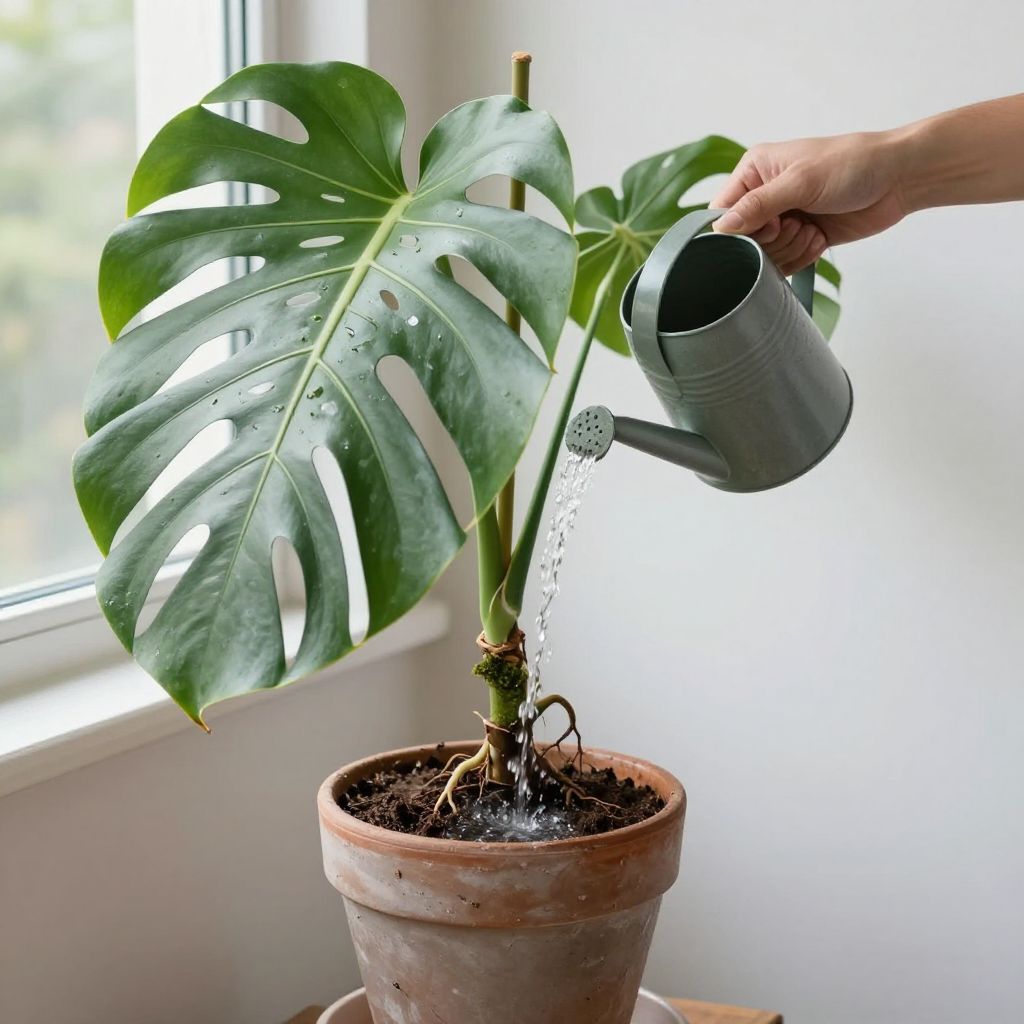
Wondering when to water monstera so it stays lush without getting root rot? The answer depends on light, pot size, soil, season, and whether your plant lives indoors or outdoors. Monstera like evenly moist soil, but they do not want to sit in water.
The best approach is to water based on soil dryness, not a fixed calendar. Check the top few inches of mix, then water thoroughly only when the plant has actually used some moisture.
When to water monstera?
Water monstera when the top 1 to 2 inches of soil feel dry for smaller pots, or the top 2 to 3 inches feel dry for larger pots. In bright, warm conditions this may be every 5 to 10 days; in cooler, lower-light periods it may be every 10 to 20 days or longer. Always adjust to your plant’s pot, soil, and season.
How to tell if your monstera needs water
The soil test is more reliable than the leaves alone. Insert a finger into the mix, use a moisture meter if you have one, or lift the pot to judge its weight.
Signs it is time to water
- The top layer of soil feels dry, but the pot is not bone-dry all the way through.
- The pot feels noticeably lighter than it did after watering.
- Leaves look slightly less firm, especially during warm weather.
- New growth slows and the plant is in active light and warmth.
Signs you may be watering too soon
- The soil is still damp several inches down.
- The pot feels heavy.
- Lower leaves yellow, especially if the plant also sits in low light.
- The mix smells sour or stale.
Important: a monstera can tolerate slight dryness better than constant wetness. Overwatering is one of the most common causes of decline.
Seasonal watering guide for monstera
Spring
As light increases and growth resumes, monstera usually need water more often. Check the soil every few days, especially if the plant is near a bright window or a grow light.
Spring is also a good time to repot if roots are crowded or the mix has broken down and stays soggy too long.
Summer
Warm temperatures and longer days increase water use. Indoor plants may dry faster, and outdoor container plants may need frequent checks after hot or windy weather.
If your monstera is outdoors in summer, protect it from harsh midday sun and drying gusts, which can make the soil dry unevenly.
Fall
As light levels drop, growth slows and watering usually decreases. Keep checking the soil, but expect longer intervals between waterings.
This is the season when many gardeners accidentally keep watering on a summer schedule, which can leave roots too wet.
Winter
Most indoor monsteras need much less water in winter because they grow more slowly. The soil may stay moist for a long time, especially in cool rooms or if the plant is far from a window.
Water only when the top layer has dried and the pot feels lighter. If your home is cool and humid, the interval may be quite long.
Indoor vs. outdoor monstera watering
Indoor plants
Indoor monsteras usually need the most careful watering because light, temperature, and airflow vary from room to room. A plant near a bright window may dry much faster than one in a dim corner.
Air conditioning, heating vents, and low humidity can also change how quickly the mix dries.
Outdoor plants
Outdoor monstera in containers dry faster than those in the ground. Rainfall, wind, and direct sun can all affect the timing.
If your monstera is planted outdoors in a warm climate, check the soil after rain as well as after hot spells. Good drainage matters even more outside.
How to water monstera correctly
When it is time to water, give the plant a thorough soak rather than a small sip. Water until it runs from the drainage holes, then empty the saucer so the roots are not left sitting in excess water.
- Check the soil moisture first.
- Use room-temperature water if possible.
- Water evenly around the pot, not just in one spot.
- Continue until water drains out the bottom.
- Discard any water left in the saucer after 10 to 15 minutes.
This method helps moisten the full root ball and flushes out built-up salts from fertilizer and tap water.
Soil, pot, and drainage make a big difference
Monstera do best in an airy, well-draining potting mix that holds some moisture but does not stay waterlogged. A chunky houseplant mix with bark, perlite, and peat or coco coir is often a better choice than dense garden soil.
The pot should have drainage holes. A decorative cachepot without drainage can trap excess water and increase the risk of root rot.
What affects how fast soil dries
- Pot size: larger pots hold moisture longer.
- Material: terracotta dries faster than plastic or glazed ceramic.
- Light: brighter light usually means faster drying.
- Temperature: warm rooms speed up water use.
- Humidity: higher humidity can slow evaporation from the soil surface.
- Root mass: a rootbound plant may dry faster than a newly potted one.
Common watering mistakes to avoid
- Watering on a strict schedule without checking the soil first.
- Letting the pot sit in standing water.
- Using a heavy, compact potting mix that stays wet too long.
- Watering only a small amount each time, which can leave lower roots dry while the top stays damp.
- Ignoring seasonal changes in light and temperature.
If your monstera is declining, resist the urge to water more often right away. First check whether the soil is actually dry, wet, or sour-smelling, because the fix depends on the problem.
Troubleshooting watering problems
Yellow leaves
Yellowing can mean overwatering, especially if the soil stays wet for days. It can also happen from old leaves, low light, or nutrient issues, so look at the whole plant before changing your routine.
Brown, crispy edges
This often points to underwatering, very dry air, or inconsistent watering. If the plant dries out too much between waterings, the leaf edges may suffer even if the roots are healthy.
Drooping leaves
Drooping can happen when the plant is too dry, but it can also happen after overwatering if roots are stressed. Check the soil before assuming the plant needs more water.
Soggy soil and root rot risk
If the soil stays wet for too long, roots may lose oxygen and begin to rot. Signs include a sour smell, persistent yellowing, mushy stems near the base, and a pot that never seems to dry down.
To correct this, let the soil dry more between waterings, improve drainage, and repot into a faster-draining mix if needed.
Practical watering routine you can follow
A simple routine works better than guessing. Check your monstera once or twice a week in warm months and less often in winter, then water only when the soil tells you it is ready.
- Insert a finger into the soil to the first knuckle.
- If it feels dry at the surface but cool and moist below, wait.
- If it feels dry at the tested depth, water thoroughly.
- Recheck after a few days so you learn how fast your plant dries.
Over time, you will notice a pattern for your home, pot, and plant size. That pattern is more useful than any generic calendar.
When to water monstera after repotting or propagation
After repotting, water once to settle the mix, then let the top layer dry before watering again. Fresh potting mix may hold moisture differently than the old one, so monitor closely for the first few weeks.
New cuttings or propagated monstera need careful moisture management too. Keep the medium lightly moist, not wet, and make sure any container or propagation setup has enough air exchange to prevent rot.
Final watering advice for healthy monstera
The best time to water monstera is when the soil has dried partway down, the pot feels lighter, and the plant is ready for a thorough soak. In bright, warm seasons this happens more often; in cool, low-light periods it happens less often.
Check your plant today, adjust for your local conditions, and keep a simple note of how fast the soil dries. If you want to keep learning, related houseplant care guides on monstera care and indoor plant watering basics can help you fine-tune your routine.