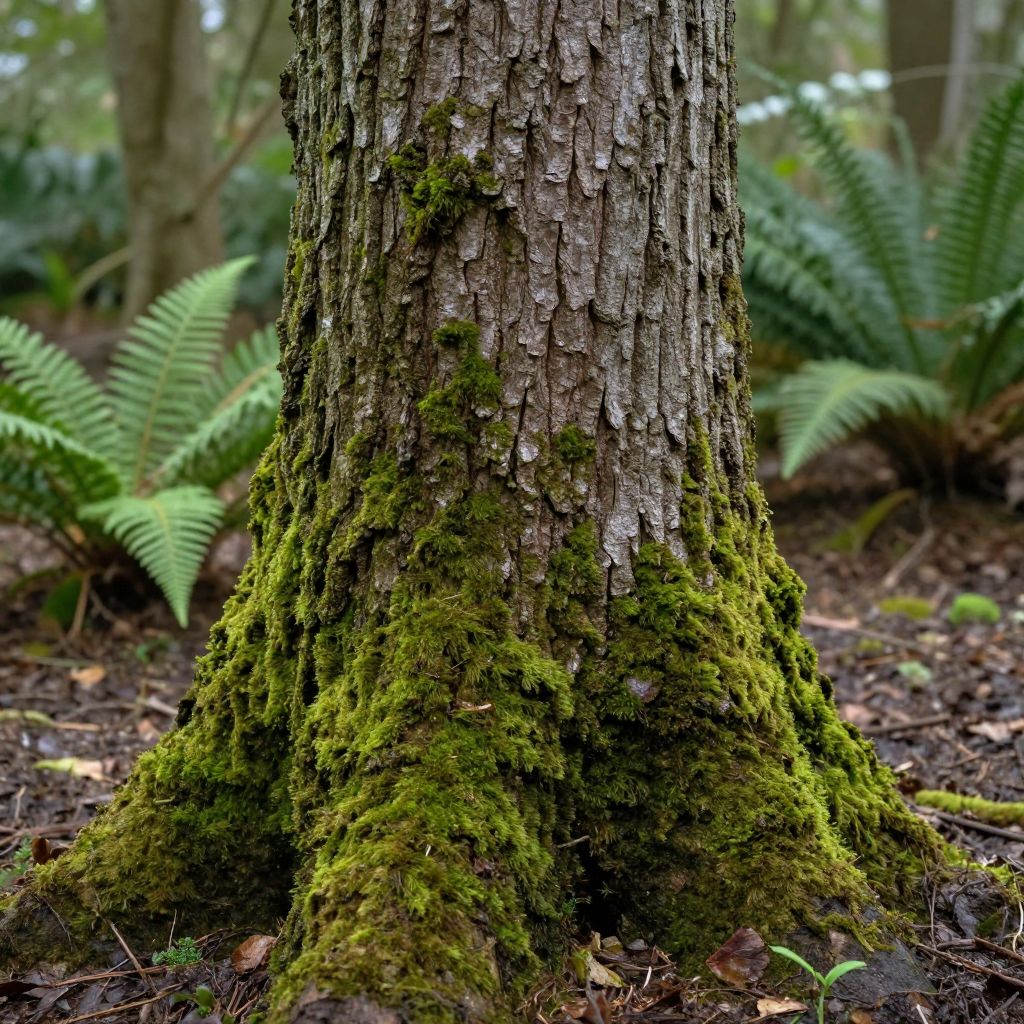
Wondering what side of the tree does moss grow on? The short answer is: moss often grows on the shadier, damper side of a tree, but not always. Its position depends on local moisture, light, wind exposure, bark texture, and the tree’s surroundings, so moss is a clue about conditions, not a reliable compass.
If you want to identify moss on trees or encourage it in your garden, it helps to understand what it needs to thrive. Moss is simple, low-growing, and sensitive to drying out, which is why it usually appears where bark stays cooler and wetter for longer.
What side of the tree does moss grow on?
Moss usually grows on the side of a tree that stays cooler, shadier, and moister for longer periods. In many landscapes that is the north side, but the real answer depends on your site: nearby buildings, dense planting, slope, prevailing wind, rainfall, and tree species can all change where moss appears.
Why moss grows where it does
Mosses are non-flowering plants that absorb moisture directly through their surfaces. They do best when bark remains damp long enough for them to establish and spread.
Common conditions that favor moss
- Shade: Less direct sun means slower drying.
- Humidity: Moist air helps moss stay hydrated.
- Rough bark: Cracks and ridges give moss a place to anchor.
- Stable moisture: Areas protected from harsh wind or reflected heat dry out more slowly.
- Low competition: Thin bark or sparse lichen cover can make it easier for moss to spread.
On a single tree, moss may be thickest on one side and nearly absent on another. That pattern often reflects microclimates more than a fixed rule.
Why the “north side” rule is not always dependable
In the Northern Hemisphere, the north side of a tree often gets less direct sun, so it is a common place to find moss. But if a tree is shaded by a fence, building, hedge, or slope, moss may grow on the side that stays dampest instead.
In the Southern Hemisphere, the pattern may often favor the south side for similar reasons, but again, local conditions matter more than a compass alone.
How to read moss on trees in your garden
If you are using moss as a garden clue, look at the whole site rather than one trunk. Moss on trees, stones, and soil can tell you where moisture lingers, where air movement is low, and which areas stay shaded most of the day.
What moss can tell you
- One side of the tree gets less sun.
- The area may hold more humidity after rain or dew.
- Wind may be blocked by nearby structures or plantings.
- The bark surface may be older, rougher, or less frequently disturbed.
Important: moss presence does not mean the tree is unhealthy. Many mature trees carry moss without any problem.
Is moss harmful to trees?
Usually, moss is not harmful to a healthy tree. It does not feed on the tree the way parasitic plants do. Instead, it uses the bark as a surface to grow on.
That said, moss can be more common on trees that already have poor vigor, dense shade, or persistently wet bark. In those cases, the moss is often a symptom of the environment rather than the cause of a problem.
When to pay closer attention
- The tree has peeling bark, dead branches, or sparse leaf growth.
- There is fungal decay, soft wood, or cavities.
- Moss is accompanied by heavy lichen, algae, or constant wetness.
- The trunk base stays soggy because of poor drainage or mulch piled too high.
If you suspect disease or structural decline, inspect the tree more broadly rather than blaming moss alone.
How to encourage moss on a tree or in the landscape
If you like the look of moss, you can create conditions that support it. The goal is not to force growth, but to make the site gentler, shadier, and less prone to drying out.
Step-by-step: creating moss-friendly conditions
- Choose a shaded or partially shaded location.
- Reduce harsh afternoon sun where possible.
- Keep the area evenly moist, not waterlogged.
- Avoid aggressive scrubbing or pressure washing bark.
- Leave rough surfaces undisturbed so moss can attach.
- Limit disturbance from frequent pruning, foot traffic, or blowing debris.
For moss on the ground, a thin layer of leaf litter can help hold moisture, but avoid thick piles that smother the surface.
What not to do
- Do not apply fertilizer to “feed” moss; that usually favors other plants instead.
- Do not overwater bark or create standing water around the trunk.
- Do not scrape moss off unless you need to inspect the bark closely.
- Do not assume moss will thrive in full sun, even with watering.
How to remove moss if you do not want it
If moss is covering a trunk, wall, or path and you want less of it, focus on changing the conditions that support it. Removal alone is temporary if the site stays damp and shaded.
Safer control methods
- Increase light by thinning nearby overgrowth where appropriate.
- Improve airflow around the tree or structure.
- Correct drainage problems that keep the area wet.
- Brush gently with a soft brush on hard surfaces if needed.
- For trees, avoid harsh scraping that can damage bark.
Never use a pressure washer on bark. It can injure the tree and create openings for pests and disease.
Common mistakes gardeners make
Because moss is so visible, it is easy to misread it. These are the most common errors to avoid.
1. Treating moss like a disease
Moss is usually a sign of conditions, not an infection. Removing it without fixing shade, moisture, or drainage often leads to quick regrowth.
2. Using compass direction as the only clue
“Moss grows on the north side” is a useful rule of thumb, but it is not universal. Nearby shade and moisture patterns matter more in many gardens.
3. Overwatering the base of trees
Trying to encourage moss by soaking the trunk can backfire. Trees need oxygen at the roots, and excess moisture around the base can create problems.
4. Damaging bark during cleanup
Scraping, wire brushing, or blasting moss off a living trunk can injure the tree. If you must remove moss from bark, work gently and only when necessary.
Seasonal considerations
Moss often looks most vigorous during cool, damp periods. In many climates, that means autumn, winter, or early spring, when evaporation is lower and rainfall is more frequent.
In hotter or drier seasons, moss may turn dull, dry, or compacted without dying. It can often revive when moisture returns, especially if the site remains shaded.
How weather affects moss growth
- Cool, wet weather: encourages spread and visible green growth.
- Hot sun: dries moss quickly and may slow growth.
- Wind: increases drying and can limit moss on exposed trunks.
- Long dry spells: may make moss look brown or dormant.
When moss on a tree is actually useful
Moss can add texture and age to a garden, especially in woodland-style planting, shaded borders, and naturalistic landscapes. It softens hard edges and can make a space feel established and calm.
It is especially attractive on older trees with rough bark, stone features, or moist, shaded planting beds. If you want that look, pair moss-friendly areas with shade-tolerant plants that also enjoy even moisture and low disturbance.
Simple checklist for gardeners
- Check which side gets the least sun.
- Look for shade from buildings, hedges, or slopes.
- Notice where bark stays damp after rain or dew.
- Inspect bark texture and tree health before making changes.
- Improve drainage and airflow if moss is unwanted.
- Keep conditions stable if you want moss to remain.
Conclusion
So, what side of the tree does moss grow on? Usually the shadier, damper side, which is often the north side in many gardens, but local conditions matter more than any fixed rule. If you want a better answer for your own yard, observe sunlight, moisture, wind, and nearby structures over a few weeks.
For more practical garden guidance on shade, moisture, and tree care, you can also explore related reading on mosses and garden conditions and tree care basics.