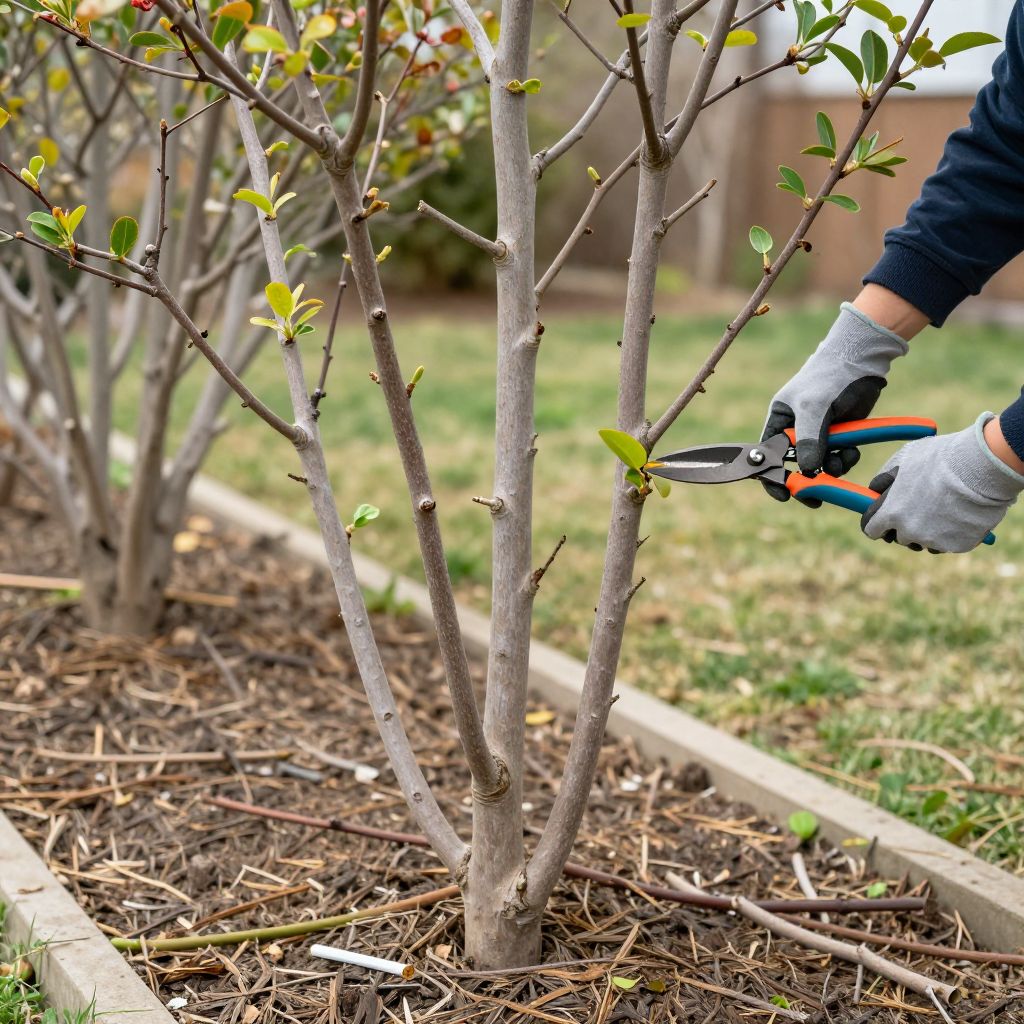
If you’re wondering when is it too late to prune crepe myrtles, the short answer is: once the plant has already pushed active new growth, especially in late spring and summer, heavy pruning is usually a bad idea. The safest time for major pruning is during dormancy in late winter, before buds break.
Crepe myrtles respond well to thoughtful pruning, but the timing matters. Pruning at the wrong time can reduce flowering, trigger weak growth, and leave the shrub or tree more vulnerable to stress and winter damage.
When Is It Too Late To Prune Crepe Myrtles?
It’s generally too late to do major pruning on crepe myrtles once they are leafing out in spring and especially after they are fully in growth and setting flower buds. In most climates, avoid heavy cuts after new shoots are several inches long; save only light cleanup, deadwood removal, or corrective pruning for later.
Why timing matters so much
Crepe myrtles bloom on new wood, which means they make flowering shoots during the current season. If you prune too late, you can remove the growth that would have produced flowers and force the plant to waste energy replacing it.
Late pruning can also create a flush of tender shoots that are more likely to be damaged by heat, drought, or an early cold snap. The result is often a plant that looks messy rather than improved.
What happens if you prune too late?
- Fewer flowers because you remove developing bloom wood.
- Weak, fast growth that can be floppy or poorly attached.
- More stress during hot weather, especially in dry climates.
- More open wounds when the plant is actively growing.
The best season to prune crepe myrtles
The best time for major pruning is late winter to very early spring, while the plant is dormant and before new buds swell. Exact timing depends on your climate, but the goal is to prune before active growth starts, not after it is underway.
In colder regions, wait until the harshest freezes have passed. In warmer regions, that may still be winter, while in mild climates it can be late winter or very early spring.
Good timing window
- Best: dormant season, late winter to early spring
- Usually okay: light cleanup in spring before strong growth
- Too late for major pruning: once leaves are expanded and shoots are actively elongating
- Not recommended: midsummer or fall, except for removing broken or diseased wood
How to tell if it’s too late in your garden
Look at the plant itself rather than the calendar alone. If buds have broken and the crepe myrtle has already leafed out, you are moving into the “too late for hard pruning” zone.
Use these signs to decide:
- Buds are open and new leaves are visible.
- New shoots are several inches long and actively growing.
- Flower clusters are forming near shoot tips.
- The plant is in full leaf and photosynthesizing strongly.
If you see these signs, limit yourself to selective pruning only.
What you can still prune later in the season
Even when it’s too late for major pruning, you can still do careful maintenance. The key is to avoid drastic shaping cuts and focus on health and safety.
Safe late-season pruning tasks
- Remove dead, broken, or diseased branches.
- Cut out crossing or rubbing stems.
- Lightly thin crowded growth to improve airflow.
- Remove suckers from the base if your plant is sending them up.
- Trim off spent flower clusters if you want a tidier look, though this is optional.
Make small, clean cuts and avoid removing large amounts of foliage or branch structure once the plant is actively growing.
How much to prune without harming the plant
For established crepe myrtles, less is usually better. A light touch preserves the natural branching habit and keeps the plant healthier over the season.
A good rule is to remove only what is necessary. If you are taking off more than about a quarter of the canopy after leaf-out, you are probably pruning too hard for the season.
Pruning goals that make sense
- Improve shape without changing the plant drastically.
- Remove weak or damaged wood.
- Open the center slightly for airflow and light.
- Keep trunks and main branches well spaced.
Common pruning mistakes to avoid
Crepe myrtles are often overpruned. The classic mistake is severe topping, sometimes called “crepe murder,” where all branches are cut back to stubs. This creates an unnatural shape and weak regrowth.
Another common error is pruning at the wrong time of year because the plant “looks overgrown.” A crepe myrtle usually needs selective thinning, not a hard reset.
Mistakes that cause problems
- Topping main stems to the same height.
- Cutting back too late in spring or summer.
- Leaving long stubs that die back.
- Using dull tools that crush stems instead of making clean cuts.
- Removing too much canopy at once.
How to prune crepe myrtles the right way
If you need to prune, use clean, sharp hand pruners, loppers, or a pruning saw depending on branch size. Make cuts just outside the branch collar so the plant can heal properly.
For larger plants, step back often and prune gradually. It is easier to remove a little more later than to fix an overpruned crepe myrtle.
Simple pruning method
- Start by removing dead, damaged, or diseased wood.
- Take out crossing branches and inward-growing shoots.
- Thin crowded stems to improve light and airflow.
- Keep the natural vase or multi-trunk form if that suits your landscape.
- Stop before the plant looks stripped or lopsided.
How climate affects pruning timing
Your local climate matters more than the date on the calendar. In warm regions, crepe myrtles may start growing earlier, which makes late pruning a bigger problem. In cooler regions, dormancy lasts longer, so the safe pruning window may extend farther into spring.
If you are unsure, prune when the plant is still dormant and before visible leaf growth begins. That approach works well in most gardens.
Adjust for your area
- Warm climates: prune earlier, before buds swell.
- Cooler climates: wait until the worst cold has passed, but not until growth is underway.
- Windy or exposed sites: avoid late pruning that can encourage tender new shoots.
- Recently planted shrubs: prune lightly only, since young plants need leaf area to establish.
Supporting a healthy crepe myrtle after pruning
After pruning, help the plant recover with good general care rather than extra fertilizer. Crepe myrtles do best in full sun, well-drained soil, and moderate watering while they establish or during dry spells.
Mulch can help conserve moisture, but keep it a few inches away from the trunk. A 2- to 3-inch layer is usually enough.
Post-pruning care checklist
- Water deeply during dry weather, especially for younger plants.
- Keep mulch off the trunk to reduce rot risk.
- Avoid heavy nitrogen fertilizer that can push soft growth.
- Watch for new shoots that are crowded or poorly placed.
- Inspect for pests or disease if the plant looks stressed.
Common pests and diseases to watch for
Healthy crepe myrtles usually handle pests well, but stress from poor pruning can make problems more noticeable. Aphids are a common issue and may leave sticky honeydew on leaves and nearby surfaces.
Powdery mildew can also appear in humid conditions, especially where airflow is poor. Good pruning timing and open branching help reduce this risk.
What to look for
- Aphids: curled leaves, sticky residue, or sooty mold on leaves below.
- Powdery mildew: white coating on leaves or buds.
- Dieback: branch tips that fail to leaf out after winter.
If you see disease or dieback, remove affected wood with clean tools and dispose of it rather than composting it if the problem is severe.
Can you shape a crepe myrtle without hard pruning?
Yes. In many landscapes, selective thinning is better than cutting the whole plant back. You can improve the shape by removing a few crowded stems, low suckers, and weak interior branches while keeping the overall structure intact.
This approach preserves bloom potential and usually gives a more graceful, natural look.
Quick answer: if you missed the pruning window
If you realize it’s already too late to prune crepe myrtles heavily, don’t panic. Skip the major cuts and wait for dormancy next season. In the meantime, remove only dead or damaged wood, then plan a proper pruning session at the right time.
For more seasonal plant care guidance, you may also want to read about how to prune flowering shrubs correctly and choosing the best mulch for landscape beds.