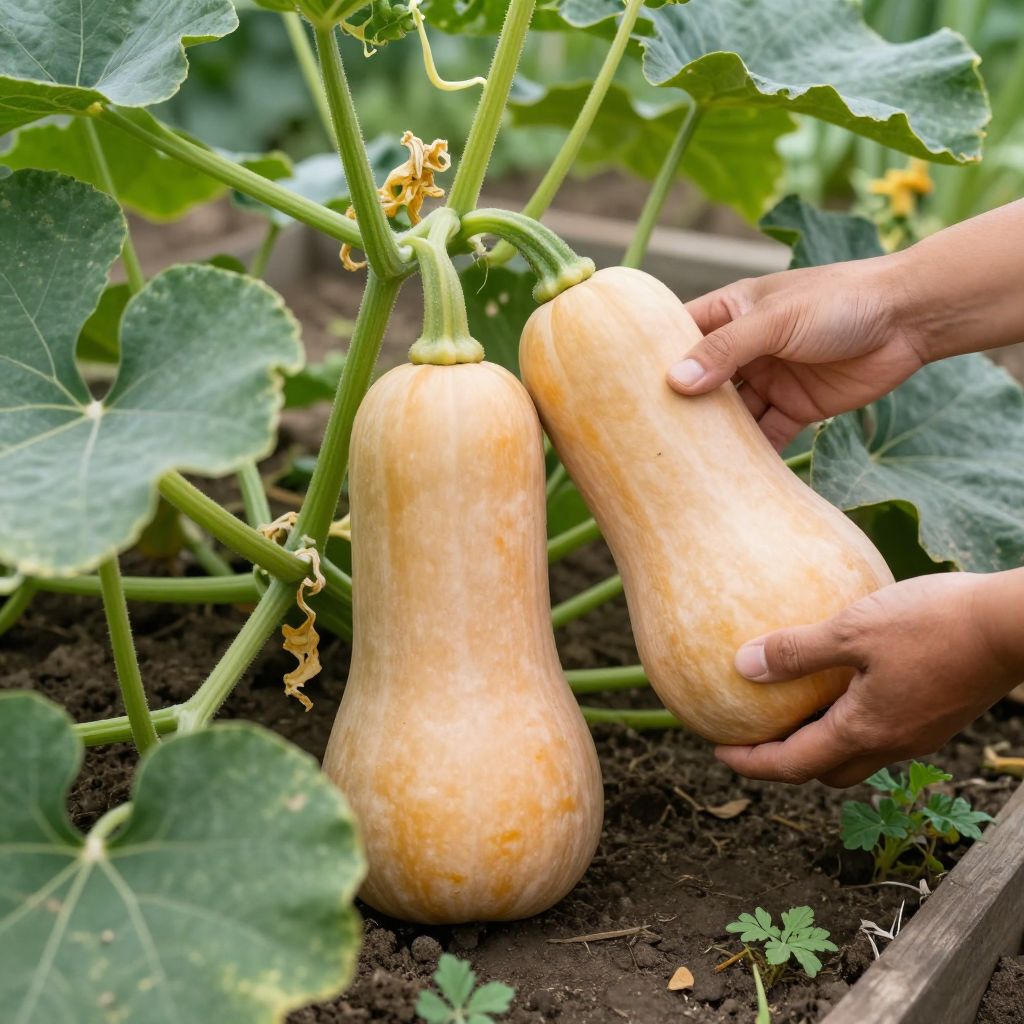
Wondering when to harvest butternut squash? The right time is usually when the skin is hard, the fruit has turned a deep tan, and the stem has begun to dry and cork over. Harvesting too early gives bland, less storable squash; waiting too long risks frost damage or rot.
With a few simple checks, you can pick butternut squash at peak quality and cure it for better flavor and storage. The exact timing depends on your climate, planting date, and the weather in your area, so it helps to look at the plant and the fruit rather than the calendar alone.
When to harvest butternut squash?
Harvest butternut squash when the rind is fully hardened, the color is a uniform tan or beige, and the stem is dry and woody. Most fruits are ready in late summer to fall, often after about 80 to 120 days from planting, but maturity varies by variety and growing conditions.
How to tell butternut squash is ripe
Butternut squash gives several clear signals when it is ready. Check more than one sign, because a single clue can be misleading if the weather has been unusual.
1. The skin is hard
Press your thumbnail into the rind. If you can easily dent or pierce it, the squash needs more time. A mature butternut squash should feel tough and resistant.
2. The color has deepened
Most varieties turn from pale green or striped immature fruit to a solid tan, buff, or beige. A little variation can be normal, but the fruit should no longer look glossy and green.
3. The stem is dry and corky
The stem should look brown, woody, and dry where it meets the fruit. A green, soft stem usually means the squash is still actively maturing.
4. The vine is declining
As the squash ripens, the vine often begins to yellow and die back. This can help confirm maturity, though vines can also decline early from disease or stress, so don’t rely on this alone.
5. The fruit sounds dull, not hollow
Unlike some melons, sound is not the best test for butternut squash. Skin hardness and stem condition are much more reliable.
How many days to maturity should you expect?
Seed packets often list a days-to-maturity range, and that is a useful starting point. Still, count it as a guide, not a guarantee. Cool weather, shade, poor pollination, drought, or disease can slow ripening, while warm conditions and healthy vines can speed it up.
- Early-maturing types may be ready in roughly 80 to 90 days.
- Standard varieties often need about 100 to 120 days.
- Short seasons may require starting seeds indoors or choosing faster varieties.
If frost is coming and your squash is close to ready, it is usually better to harvest slightly early and cure it indoors than to leave it outside and risk cold injury.
What happens if you harvest too early?
Harvesting too soon is one of the most common mistakes. Immature butternut squash has thinner skin, lower sweetness, and shorter storage life. The flesh may be watery, and the fruit can shrivel or spoil faster after picking.
If you are unsure, leave the squash on the vine a little longer and recheck every few days. In most gardens, a few extra days can make a noticeable difference in flavor and keeping quality.
What happens if you harvest too late?
Leaving mature squash on the vine too long can expose it to frost, wet weather, or pests. Cold damage can shorten storage life, and a squash that sits on damp soil may develop soft spots or rot.
If the vine is dying back and the fruit is already mature, pick it promptly. Once temperatures start dropping, especially near freezing, it is safer to harvest and cure indoors.
How to harvest butternut squash properly
Use clean, sharp pruners or a knife and cut the fruit from the vine instead of twisting or pulling it off. A short stem attached to the squash helps it store better.
- Choose a dry day if possible.
- Inspect the fruit for maturity signs.
- Cut the stem 1 to 2 inches above the squash.
- Handle the fruit gently to avoid bruising.
- Keep harvested squash out of wet grass or muddy soil.
Do not carry butternut squash by the stem. A broken stem creates an entry point for rot and reduces storage life.
Curing butternut squash after harvest
Curing helps toughen the skin and improve storage. Place the squash in a warm, dry, well-ventilated area for about 10 to 14 days. A temperature around room warmth is usually fine, as long as the space is dry and not humid.
During curing, keep the squash off cold floors and away from direct sun if the sun makes the area too hot. After curing, store them in a cool, dry place with good air circulation.
Why curing matters
- Helps minor surface scratches dry over.
- Improves keeping quality.
- Can enhance flavor as starches convert to sugars.
Best storage conditions after harvest
After curing, store butternut squash in a cool, dry location. A pantry, basement, or other frost-free space often works well if humidity is moderate and air can circulate.
- Keep squash from touching each other if possible.
- Check regularly for soft spots or mold.
- Use damaged squash first.
Storage life depends on variety and conditions, but properly cured squash often keeps for weeks to months. Any squash with cuts, bruises, or a missing stem should be used sooner.
Common problems that affect harvest timing
Frost threatens before the fruit is ready
If frost is forecast and the squash is near maturity, harvest it. Even a light frost can damage the rind and shorten storage life. If the fruit is still very immature, it may not store well, but it can still be cooked fresh.
The vine is diseased or dying early
Powdery mildew, squash vine borers, or other stress can kill the vine before the fruit fully matures. In that case, leave the squash on the vine only if it is still actively sizing up and the weather remains warm. If the plant is collapsing, harvest what has developed and cure it.
The fruit is large but still green
Size alone does not mean ripeness. A big green squash may still have a soft rind and immature flesh. Wait for the skin to harden and the color to change before picking.
Rainy weather makes harvest messy
Wet conditions can increase rot risk. If you must harvest in damp weather, dry the squash carefully before curing and avoid stacking them while they are wet.
Growing conditions that help squash mature on time
Good growing conditions make harvest timing easier because the fruit matures more evenly. Butternut squash grows best in full sun, fertile soil with good drainage, and steady moisture while the fruit is developing.
- Sunlight: Aim for at least 6 to 8 hours of direct sun.
- Soil: Rich, well-drained soil with added compost supports healthy vines.
- Watering: Water deeply during dry spells, especially while flowering and fruiting.
- Spacing: Give vines room to spread so leaves dry faster and disease pressure is lower.
Healthy vines are more likely to finish ripening fruit before cold weather arrives. If your season is short, consider starting seeds indoors or choosing a faster-maturing variety suited to your climate.
Should you prune or thin the vines before harvest?
Light vine management can sometimes help the plant focus energy on existing fruit, but avoid heavy pruning late in the season. Removing too much foliage can reduce the plant’s ability to feed and ripen the squash.
If you need to improve airflow or remove diseased leaves, do so carefully with clean tools. Keep enough healthy leaf area to shade the fruit and support ripening.
Quick harvest checklist
- The rind is hard and resists a thumbnail test.
- The squash is fully tan or beige, not glossy green.
- The stem is dry, brown, and corky.
- The fruit has reached a mature size for the variety.
- Frost is approaching, or the vine is naturally declining.
Conclusion
If you are still asking when to harvest butternut squash, use the fruit itself as your guide: hard skin, mature color, and a dry stem are the best signs. Cut it cleanly, cure it in a warm dry place, and store it cool for the best flavor and keeping quality. For more seasonal growing help, you may also want to read about how to grow winter squash and how to store homegrown vegetables.