Wondering when to plant marigold seeds so they sprout well and bloom on time? The best planting time depends on your climate and whether you’re sowing indoors or outdoors. Marigolds are warm-season annuals, so the goal is to wait until frost danger has passed and the soil is warm enough for quick germination.
If you start too early in cold, wet soil, seeds may rot or seedlings may stall. If you time sowing well, marigolds are one of the easiest flowers to grow from seed, with fast germination and reliable color for beds, borders, and containers.
When to plant marigold seeds?
Plant marigold seeds outdoors after the last frost date, once soil has warmed and nights are consistently mild. For indoor starts, sow seeds 4 to 6 weeks before your average last frost, then transplant after hardening off. In warm climates, you can direct sow in spring or even succession sow for longer bloom.
Best planting time by growing method
Direct sowing outdoors
Direct sow marigold seeds in spring after frost risk has passed. Marigolds germinate best in warm soil, so wait until the ground is workable and no longer cold to the touch. If your spring is cool and damp, waiting an extra week or two often gives better results than rushing.
As a general guide, soil temperatures around 65°F to 70°F help marigold seeds sprout faster and more evenly. In cooler regions, that often means late spring. In mild or frost-free climates, you can sow earlier as long as the soil is warm enough.
Starting seeds indoors
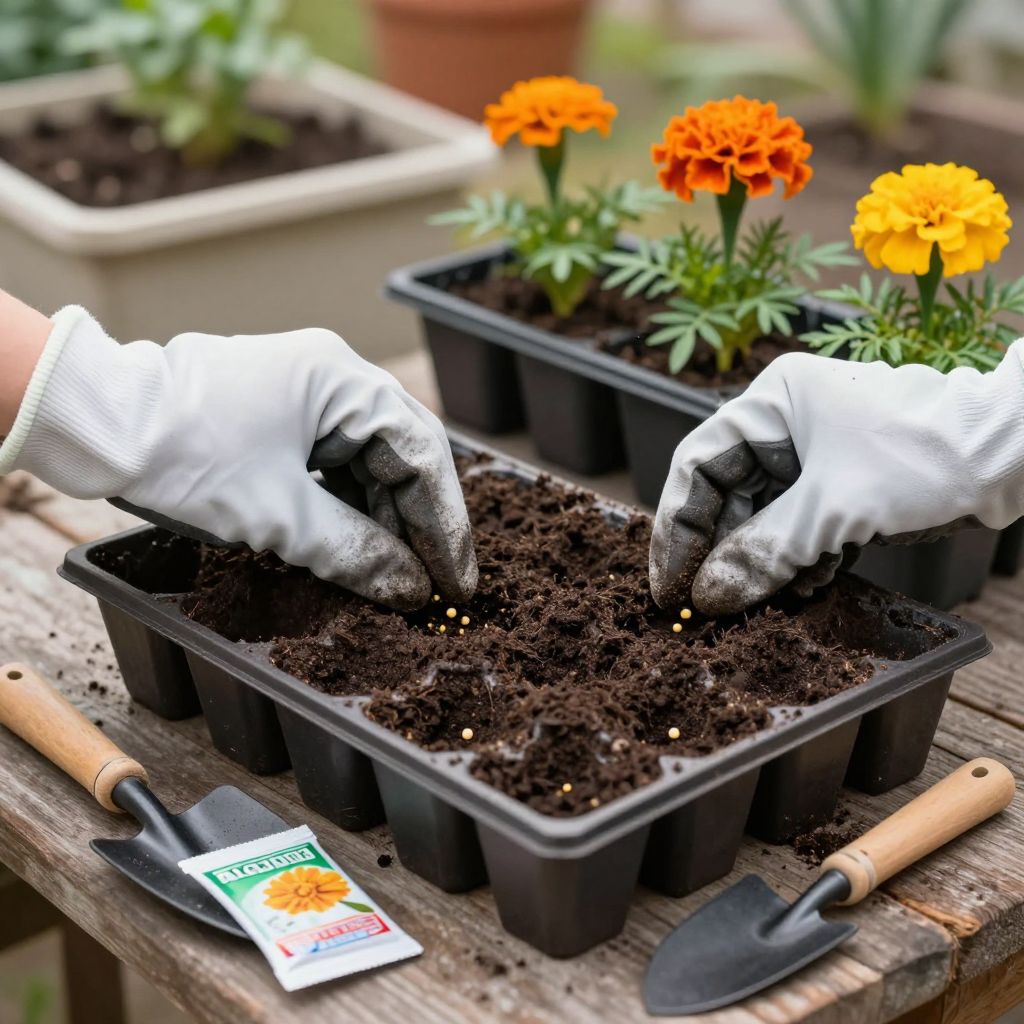
If you want earlier blooms, start marigold seeds indoors about 4 to 6 weeks before your local last frost date. Use small pots or seed trays with drainage holes and a light seed-starting mix. Transplant outdoors only after nights are reliably above freezing and the seedlings have been hardened off.
Indoor sowing is especially helpful in short-growing-season areas or if you want compact, well-rooted transplants ready for containers and borders. Just avoid starting them too early, because marigolds can become leggy if held indoors for too long.
Fall sowing?
In most climates, marigolds are not a fall-planted flower for overwintering outdoors. They are frost-tender annuals and usually decline with cold weather. If you live in a very warm frost-free region, you may be able to grow them through much of the year, but spring and early summer are still the most dependable planting windows.
How to plant marigold seeds successfully
- Choose a sunny site. Marigolds bloom best in full sun, with at least 6 hours of direct light each day.
- Prepare loose, well-drained soil. Work in a little compost if the soil is poor, but avoid making it overly rich.
- Sow at the right depth. Plant seeds about 1/4 inch deep, or lightly cover them with fine soil.
- Water gently. Keep the seedbed evenly moist, not soggy, until germination.
- Thin seedlings if needed. Give each plant room to grow so air can move around the foliage.
Most marigold seeds sprout in about 5 to 10 days in warm conditions, though cooler soil can slow them down. If seedlings are crowded, thin them early to reduce competition and improve airflow.
Soil, sun, and spacing for healthy marigolds
Marigolds are adaptable, but they perform best in ordinary garden soil that drains well. Heavy, waterlogged ground can lead to weak growth and root problems, especially when seeds are just starting.
Soil preparation
- Use soil that crumbles easily and does not stay muddy after rain.
- Mix in compost if your soil is very sandy or depleted.
- Avoid overfertilizing, which can produce lots of leaves and fewer flowers.
Sunlight needs
More sun usually means more blooms. In very hot climates, marigolds can handle a little afternoon shade, but too much shade often leads to stretched stems and fewer flowers.
Spacing
Space plants according to the type you’re growing and the mature size listed on the seed packet. Good spacing helps prevent mildew and keeps the plants looking tidy. If you’re unsure, give them a little extra room rather than crowding them.
Indoor sowing vs. outdoor sowing
When indoor sowing makes sense
Start seeds indoors if your spring is short, your soil stays cold, or you want flowers earlier in the season. This also helps if slugs, birds, or heavy rain tend to damage tiny seedlings outdoors.
When direct sowing is better
Direct sowing is simpler and often works very well for marigolds in warm weather. If your frost date has passed and the soil is warm, sowing straight into the garden avoids transplant shock and saves indoor space.
For many gardeners, the best approach is a mix of both: start a few plants indoors for early color and direct sow a second batch later for a longer display.
Common mistakes to avoid
- Sowing too early. Cold soil slows germination and can cause seeds to rot.
- Planting too deep. Marigold seeds need only light coverage.
- Overwatering. Wet soil can encourage damping off and weak roots.
- Using too much fertilizer. Rich soil may produce leafy plants with fewer flowers.
- Skipping hardening off. Indoor seedlings need a gradual transition to outdoor conditions.
Watering and early care after planting
Keep the seedbed lightly moist until seedlings are established. Once marigolds are growing, water when the top inch of soil feels dry, rather than on a fixed schedule. Deep, less frequent watering is usually better than frequent shallow watering.
Try to water at the base of the plants instead of overhead when possible. Dry foliage helps reduce fungal issues, especially in humid weather or crowded beds.
Pinching, deadheading, and season-long bloom
Marigolds often bloom more if you remove spent flowers regularly. Deadheading redirects energy toward new buds instead of seed production. For taller types, pinching back the growing tips when plants are young can encourage bushier growth.
If plants become tall and floppy, they may need more sun, better spacing, or less nitrogen-rich feeding. Compact, well-branched marigolds usually flower more heavily and look fuller in containers and borders.
Pests and problems to watch for
Marigolds are fairly tough, but young plants can still face trouble. Slugs may chew seedlings, aphids can cluster on tender growth, and overly wet conditions may lead to damping off or root rot.
- Yellowing leaves: Often linked to poor drainage, too much water, or low light.
- Leggy seedlings: Usually caused by insufficient light indoors.
- Few blooms: Often due to shade, excess fertilizer, or crowded planting.
- Wilting in hot weather: Check soil moisture and mulch lightly once plants are established.
If seedlings collapse at the soil line indoors, improve airflow, use clean containers, and avoid keeping the mix too wet. Outdoors, healthy spacing and morning sun help reduce disease pressure.
Can you succession sow marigolds?
Yes. In many climates, you can sow marigold seeds every 2 to 4 weeks through late spring or early summer to extend flowering. This works especially well if you want a steady supply of plants for containers, edging, or cutting gardens.
Succession sowing is most useful where summers are long enough for new plants to mature before cool weather returns. In short-season regions, one well-timed sowing may be the better choice.
When to transplant marigold seedlings
Move seedlings outdoors after the last frost date and after you’ve hardened them off for about a week. Start with a few hours in a sheltered spot, then gradually increase sun and wind exposure. This reduces transplant shock and helps the plants settle in quickly.
Transplant on a mild day if possible, and water the seedlings in well after planting. If the forecast turns cold, cover young plants or wait a few more days rather than risking frost damage.
Conclusion
If you’re deciding when to plant marigold seeds, the safest rule is to wait for warm soil and frost-free weather outdoors, or start seeds indoors 4 to 6 weeks before your last frost. Give them sun, drainage, and light moisture, and they’ll reward you with easy, bright flowers.
For more seasonal planting help, you may also want to read related guides on starting flower seeds indoors and choosing the best annual flowers for your garden.