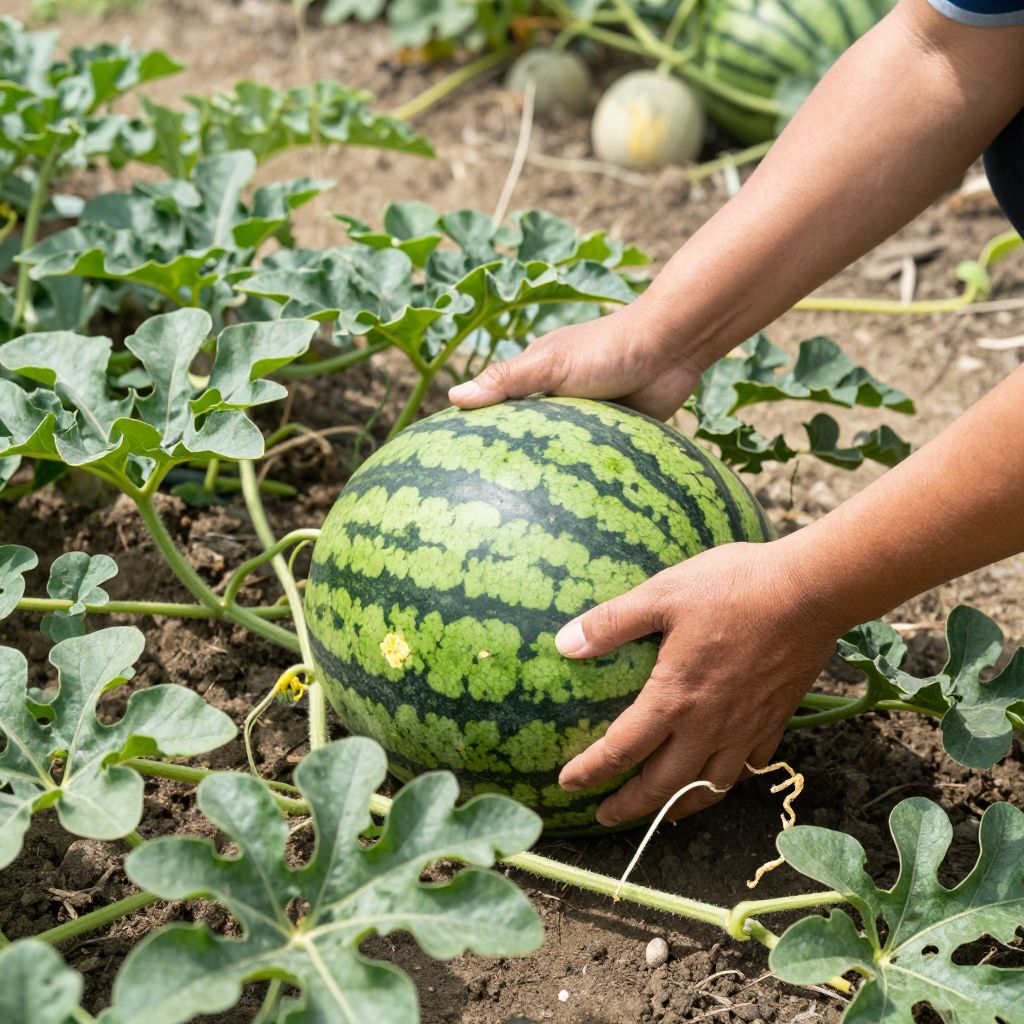
Wondering when to pick watermelon so it’s sweet, crisp, and fully ripe? Timing matters more than the calendar, because watermelons do not ripen much after harvest. The best harvest window depends on the variety, weather, and how the vine is growing, so learning a few ripeness signs will save you from picking too early or too late.
This guide shows you how to read the plant, check the fruit, and harvest at the right stage. You’ll also learn what growing conditions help watermelons mature evenly, plus the most common mistakes gardeners make at harvest time.
When to pick watermelon?
Pick watermelon when the tendril nearest the fruit turns brown and dries, the underside spot changes from white to creamy yellow, and the rind looks dull rather than shiny. For many varieties, this is usually 70 to 100 days after planting, but the fruit itself should always guide you more than the calendar.
How to tell when a watermelon is ripe
Watermelons can be tricky because they do not soften like peaches or smell strongly when ripe. Use several signs together, not just one, to avoid guessing.
1. Check the curly tendril near the fruit
Look at the small curly vine closest to the watermelon stem. When that tendril turns brown and dries up, the fruit is often close to harvest.
This is one of the most reliable signs, especially if the vine is healthy and not stressed by drought or disease. If the tendril is still green, the fruit usually needs more time.
2. Look at the ground spot
The ground spot is the part of the melon that rested on the soil. A ripe watermelon usually has a creamy yellow, buttery yellow, or deep yellow spot rather than a pale white one.
If the spot is still white or very light, the fruit is often immature. This sign is especially useful for large melons that are hard to judge by feel alone.
3. Observe the rind color and sheen
Ripe watermelons often develop a dull, matte rind instead of a glossy one. The stripes may look more defined, and the overall skin may seem less bright.
Shiny fruit is often still actively growing. However, some varieties naturally have a different rind finish, so use this sign alongside the tendril and ground spot.
4. Tap for a deep, hollow sound
Many gardeners tap the melon and listen for a deep, hollow sound. This can help, but it is less reliable than the other signs because sound varies by variety and melon size.
If you are new to growing watermelons, treat tapping as a backup clue rather than the deciding factor.
5. Check the stem attachment
When a watermelon is ready, the stem nearest the fruit often looks dry and slightly cracked or woody. If the stem is still green and firm, the fruit may need more time.
Be careful not to confuse a dry stem with a fruit that has been stressed by heat or water shortage. That is why it helps to check several signs at once.
How many days after planting are watermelons ready?
Most watermelons are ready about 70 to 100 days after planting, but some types mature sooner and some need longer. Seed packets often list days to maturity, which gives you a useful starting point.
Weather can shift the timing. Cool nights, cloudy stretches, poor pollination, or drought stress may delay ripening, while very hot conditions can speed up vine growth without always improving fruit quality.
Use the calendar as a guide, not a rule
- Count from planting or transplanting, depending on how you started the crop.
- Expect later harvests in cooler climates or short summers.
- Watch fruit development closely once the melon reaches its expected maturity window.
If you grow several varieties, label them so you can compare maturity dates and avoid harvesting everything at once.
Seasonal timing for harvesting watermelons
Watermelons are harvested in warm weather, usually from midsummer through early fall, depending on your climate and planting date. They need a long, hot growing season to develop sweetness.
In cooler regions, fruit may ripen later than expected or not fully mature before frost. In very warm regions, harvest can come earlier, but fruit still needs enough time on the vine to finish filling with sugar.
What to do as the season changes
- As nights cool, check fruit more often because ripening can slow or stall.
- Harvest before frost, since even light frost can damage vines and fruit quality.
- If heavy rain arrives late in the season, inspect melons for cracking or rot.
Growing conditions that affect ripening
Healthy vines produce better fruit and clearer ripeness signals. If your watermelons are struggling, the fruit may be harder to judge and may not sweeten properly.
Sunlight
Watermelons need full sun, ideally 8 or more hours a day. Less light can slow ripening and reduce sweetness.
Soil and drainage
Plant in loose, fertile soil that drains well. Watermelon roots dislike soggy ground, and poor drainage can lead to weak vines, disease, and bland fruit.
Before planting, work in compost if your soil is low in organic matter. Compost improves structure and moisture retention without making the soil heavy, which is especially helpful in sandy or compacted beds.
Watering
Water consistently while vines are growing and fruit is sizing up. Irregular watering can cause fruit to split or taste less sweet.
Once fruit is nearing maturity, avoid sudden swings between dry soil and heavy watering. A steady moisture level helps the melon finish ripening evenly.
Pollination
Poor pollination can leave you with misshapen or underdeveloped fruit. If the fruit is small, lopsided, or stops growing early, it may not ripen properly.
Encourage pollinators by avoiding broad-spectrum insecticides and planting nearby flowers that attract bees.
Step-by-step: how to harvest watermelon
When the signs point to ripeness, harvest carefully. Watermelons are heavy, and rough handling can bruise the fruit or damage the vine.
- Check the tendril, ground spot, rind, and stem before cutting.
- Use a clean, sharp knife or pruners.
- Cut the stem, leaving about 1 to 2 inches attached to the fruit.
- Lift the melon with both hands to avoid dropping it.
- Move it into shade or indoors soon after harvest.
Do not twist or yank the fruit off the vine. That can tear the stem and shorten storage life.
Common mistakes when deciding when to pick watermelon
Many gardeners harvest too early because they expect the melon to “finish” indoors. Unlike bananas or tomatoes, watermelons do not become sweeter after picking.
- Picking by size alone: A large melon can still be immature.
- Relying on one sign only: Use several ripeness clues together.
- Waiting too long: Overripe melons can become mealy or lose flavor.
- Ignoring weather: Heavy rain, heat stress, or frost can change harvest timing.
- Handling fruit roughly: Bruising affects storage and eating quality.
Troubleshooting: if your watermelon doesn’t seem ripe
If the melon is still hard, shiny, and has a white ground spot, it likely needs more time. Keep the vine healthy, avoid overwatering, and check again in a few days.
If the vine is declining from disease or frost is approaching, you may need to harvest a little early. In that case, choose the fruit that shows the most ripeness signs and expect a flavor difference compared with fully vine-ripened melons.
Why fruit may stay underdeveloped
- Not enough heat or sunlight
- Short growing season
- Poor pollination
- Too much shade from nearby plants
- Stress from drought, pests, or disease
Storing watermelon after harvest
Freshly picked watermelon keeps best in a cool place out of direct sun. Whole fruit can usually hold for about 1 to 2 weeks, sometimes longer if it was harvested cleanly and handled gently.
Once cut, refrigerate the pieces promptly and cover them to prevent drying out. If you plan to store whole melons, avoid stacking them where they can bruise.
Quick harvest checklist
- Curly tendril near the fruit is brown and dry
- Ground spot is creamy or deep yellow
- Rind looks dull, not glossy
- Stem near the fruit is drying
- Days to maturity are close to the expected range
Conclusion
To know when to pick watermelon, trust the fruit, not just the calendar. Check the tendril, ground spot, rind, and stem together, then harvest with a clean cut once the melon shows clear ripeness signs.
If you want to improve next season’s harvest, review your planting site, sunlight, and watering routine now so the vines can mature fruit more evenly. For more seasonal growing help, you may also want to read about how to grow watermelon and harvesting summer fruits.