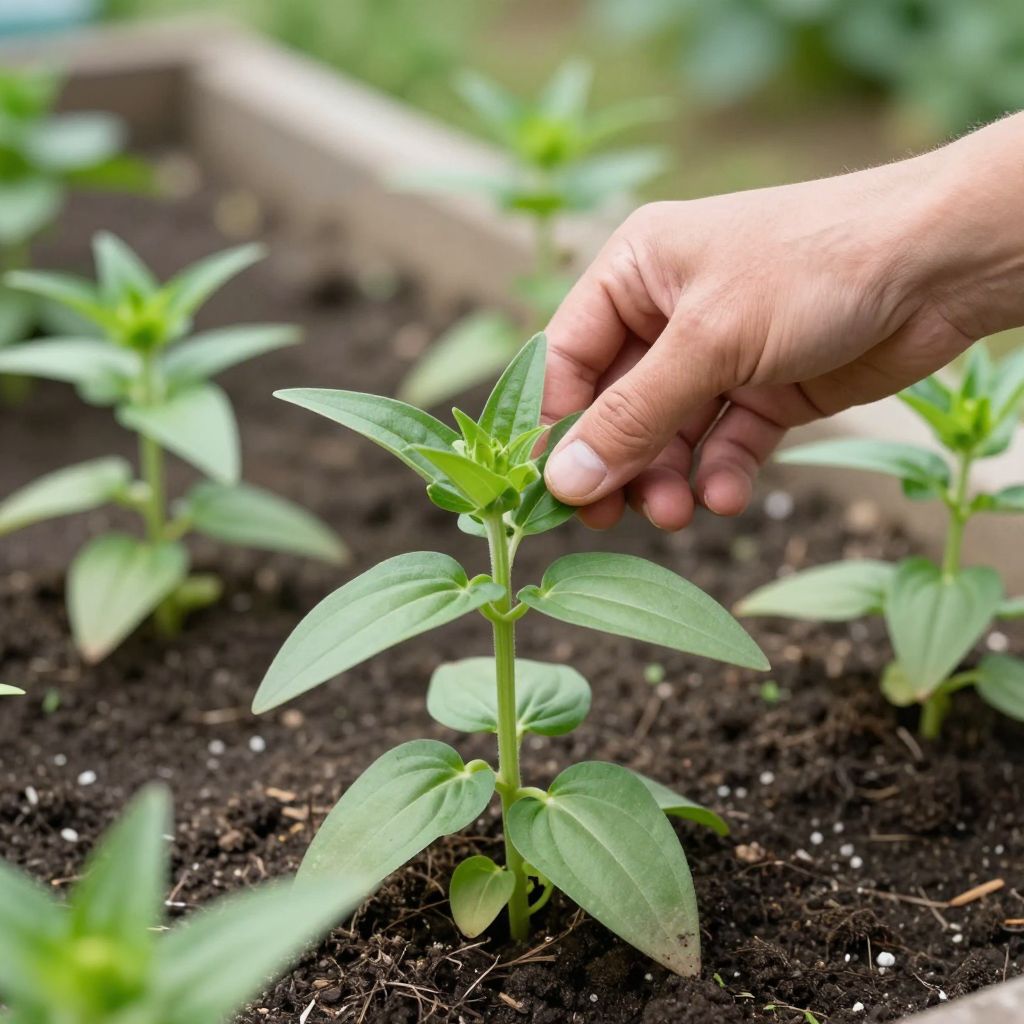
Wondering when to pinch zinnias so they grow bushier and bloom better? The best time is when young plants are about 6 to 12 inches tall and have several sets of true leaves. Pinching too early can slow growth, while pinching too late may reduce the benefit, so timing matters.
With the right timing and a clean pinch, you can encourage stronger stems, more branching, and often more flowers. The goal is to shape the plant early without stressing it, and that depends on how fast your zinnias are growing in your climate and garden conditions.
When to pinch zinnias?
Pinch zinnias once they are well established, usually at 6 to 12 inches tall and before they start forming flower buds. Remove the top growing tip just above a leaf node or pair of leaves. This encourages side shoots, creating a fuller plant with more stems for blooms.
Why pinching zinnias helps
Zinnias naturally want to grow upward from a main stem. Pinching interrupts that strong vertical growth and tells the plant to branch out instead.
For many gardeners, that means:
- More side stems
- A bushier shape
- More stems for cutting
- Less floppy, top-heavy growth in some varieties
This is especially useful if you want cut flowers or a fuller display in beds and borders. It is less necessary if you are growing compact zinnias that already branch well, but it can still improve shape.
How to tell zinnias are ready to pinch
Don’t pinch based only on height. A young zinnia should also have a sturdy stem and several sets of true leaves, not just the first seed leaves.
Good signs your zinnias are ready
- The plant is 6 to 12 inches tall
- It has at least 3 to 4 sets of true leaves
- The stem feels firm, not thin and fragile
- No flower buds are visible yet
If the plant is still tiny or struggling, wait. A stressed zinnia needs to recover and root well before you remove the growing tip.
How to pinch zinnias step by step
- Choose a healthy plant on a dry day.
- Find the top growing tip at the center of the main stem.
- Locate a pair of leaves or a leaf node just below the tip.
- Use clean fingers or small pruners to remove the soft top growth.
- Pinch or cut just above the node, leaving the lower leaves intact.
You do not need to remove much. A small pinch is enough to redirect growth. Clean tools help prevent damage, especially if the stems are thicker or if you are pinching several plants in a row.
Finger pinch or snip?
For soft, young zinnias, you can usually pinch with your fingers. If the stem is tougher, use clean scissors or hand pruners for a neat cut.
A clean cut above a leaf node is better than tearing the stem. Damaged stems can heal more slowly and may invite disease.
Best seasonal timing for pinching zinnias
The right season depends on when you sow and how quickly your plants grow. In warm weather, zinnias often grow fast, so you may reach the pinching stage soon after transplanting or thinning.
Spring and early summer
Pinch young zinnias after they have settled in and are actively growing. If you started seeds indoors, wait until after transplanting and after the plants have resumed growth in the garden.
Midsummer
If your zinnias are still vegetative and not budding, you can still pinch them once to encourage branching. Just be aware that very late pinching may delay the first flowers.
Late season
Once plants are already budding or flowering heavily, pinching is usually not worth it. At that stage, you are better off deadheading spent blooms to keep new flowers coming.
When not to pinch zinnias
Pinching is helpful, but there are times when it can do more harm than good.
- Do not pinch seedlings that are too small. They need leaf area to grow and recover.
- Do not pinch plants already forming buds. You may remove the first flower flush.
- Do not pinch stressed plants. Heat, drought, transplant shock, or pests can slow recovery.
- Do not pinch repeatedly. One early pinch is often enough for most home gardens.
If you want a taller, single-stemmed flower for cutting, skip pinching on some plants and let them grow naturally. That can be useful if you want longer stems rather than a bushier plant.
Growing conditions that affect pinching results
Healthy zinnias respond better to pinching than weak ones. Good growing conditions help the plant recover quickly and branch strongly.
Sunlight
Zinnias bloom best in full sun, with at least 6 to 8 hours of direct light. In shade, they may stretch and become leggy, which can make pinching less effective.
Soil and drainage
Plant zinnias in well-drained soil. Heavy, waterlogged soil can slow growth and increase disease problems, especially after pinching when the plant is trying to recover.
If your soil is poor, mix in compost before planting. Compost improves structure and helps the soil hold moisture without staying soggy.
Watering
Water deeply when the top inch or two of soil dries out, especially during hot weather. Avoid frequent shallow watering, which can produce weak roots and spindly growth.
Keep water off the foliage when possible. Wet leaves can encourage fungal disease, especially in humid weather or crowded plantings.
Common mistakes when pinching zinnias
Most pinching problems come from timing or cutting too much.
- Pinching too early: The plant may stall instead of branching.
- Pinching too late: You may remove buds and delay flowering.
- Removing too much stem: Cut just above a node, not halfway down the plant.
- Using dirty tools: This can spread disease between plants.
- Ignoring plant stress: A thirsty or heat-stressed zinnia may not bounce back quickly.
If you are unsure, wait a few days and watch the plant. Zinnias grow quickly in warm weather, so a short delay is usually better than pinching at the wrong stage.
What to expect after pinching
After pinching, the plant usually pauses briefly and then sends out side shoots from the leaf nodes below the cut. These new stems often become flowering stems later in the season.
Give the plant time. You may not see obvious branching immediately, but healthy zinnias usually respond within a couple of weeks in warm growing conditions.
How to care for pinched zinnias
- Keep soil evenly moist, not soggy
- Mulch lightly to help conserve moisture
- Watch for pests and disease on new growth
- Deadhead spent blooms to keep flowers coming
Pests and diseases to watch for
Pinching itself does not cause disease, but open, crowded, or stressed plants are more vulnerable. Good spacing and airflow matter.
Common issues
- Powdery mildew: More likely in humid conditions or crowded beds
- Leaf spots: Often worsened by wet foliage and poor airflow
- Aphids: Can cluster on tender new growth after pinching
If you see disease, remove badly affected leaves and improve airflow. If aphids appear, a strong spray of water can help dislodge them on small infestations.
Pinching zinnias for cutting gardens
If you grow zinnias for bouquets, pinching can be a smart move. It often creates more stems, which means more flowers to cut later.
For cutting gardens, many gardeners pinch early and then keep harvesting regularly. Cutting flowers also encourages more blooms, so pinching and deadheading work well together.
If you want long stems, space plants properly and avoid overcrowding. Good air circulation and sunlight support straighter growth and healthier blooms.
Should all zinnias be pinched?
Not always. The decision depends on your goal and the type of zinnia you are growing.
- Pinch if you want a bushier plant with more stems.
- Skip pinching if you want the earliest possible blooms.
- Consider pinching if plants are tall and leggy.
- Leave some unpinched if you want to compare results in your garden.
Many gardeners do a little of both: pinch some plants for branching and leave others alone for earlier flowers or longer stems.
Final thoughts on when to pinch zinnias
The best time to pinch zinnias is when they are young, healthy, and actively growing, usually around 6 to 12 inches tall before buds appear. Make one clean pinch above a leaf node, then let the plant recover and branch naturally.
If you are planning your bed now, you may also find it helpful to read more about deadheading annual flowers and how to grow zinnias from seed for a longer bloom season and better results.