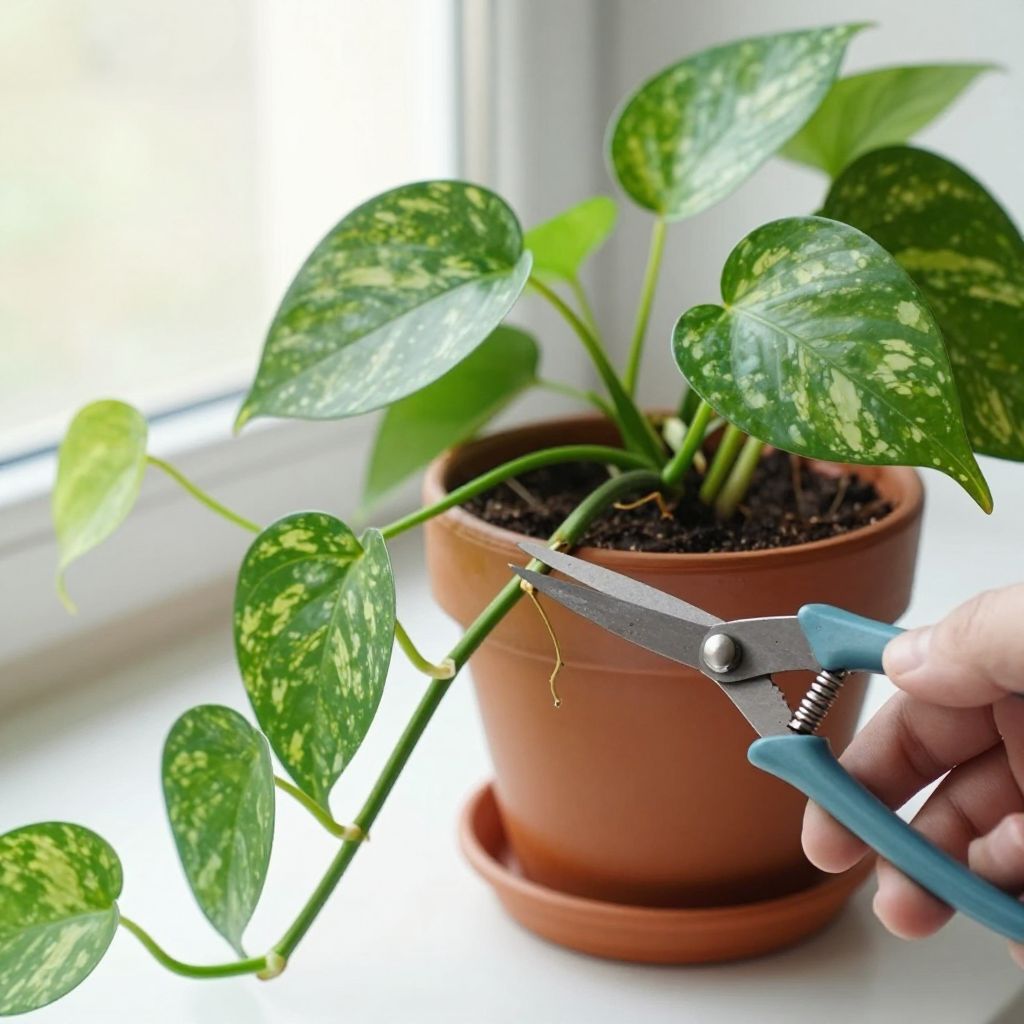
Wondering where to cut pothos so it grows back fuller instead of sparse? The best place to cut is just above a leaf node, the small bump on the vine where leaves and aerial roots emerge. That node is where new growth forms, and cutting there encourages branching and gives you a healthy cutting for propagation.
Whether your pothos is trailing from a shelf or climbing a pole, the right cut can shape the plant, reduce legginess, and help you make new plants. The key is to cut with purpose: choose a node, make a clean cut, and leave enough foliage on the parent plant to keep it growing well.
Where To Cut Pothos?
Cut pothos just above a node on the vine, usually 1/4 to 1/2 inch above it. If you want to propagate, make sure the cutting includes at least one node, and ideally one or two leaves. For pruning the mother plant, leave several nodes and healthy leaves behind so it can push out new side shoots.
Understanding pothos nodes, stems, and leaves
Before you cut, it helps to know what you are looking at. Pothos vines have alternating leaves, and each leaf attaches at a node. Nodes often look like a small joint, bump, or ring, and they may have a little aerial root nub.
Why the node matters
The node is the growth point. If you cut too far below it, you may remove the part that can root or resprout. If you cut too far above it, you leave a stub that can dry back and look untidy.
- Node: the point where leaves and roots can emerge
- Internode: the bare section of stem between two nodes
- Aerial root: a root-like nub that often forms at a node
Best places to cut depending on your goal
To make the plant bushier
Cut long vines back to just above a node closer to the pot. This encourages the plant to branch from lower nodes and can reduce the “stringy” look that develops when pothos stretches toward light.
If a vine is very long, you can shorten it by cutting several nodes back at once. A good rule is to leave a few healthy leaves on each stem so the plant still has enough foliage to photosynthesize.
To propagate new plants
Take a cutting that includes at least one node. A cutting with one to three leaves is usually easy to handle, and a node is essential if you want roots to form in water or soil.
For a fuller new plant, take several cuttings and root them together in one pot after they have roots. This is often the easiest way to turn one leggy pothos into a dense, attractive plant.
To remove damaged or unhealthy growth
Cut back yellowing, broken, or diseased sections to healthy tissue. Make the cut just above a node on the healthy part of the vine, or remove the entire damaged vine if it is badly affected.
If you see soft, blackened, or mushy stems, trim back until the stem tissue is firm and green. Sterilize your tool between cuts if disease is suspected.
How to cut pothos the right way
- Inspect the vine and find a healthy node.
- Decide whether you are pruning the mother plant, taking a cutting, or both.
- Use clean, sharp scissors, pruners, or a knife.
- Make the cut just above the node on the parent plant.
- If propagating, ensure the cutting itself includes a node.
- Place the cutting in water or a suitable rooting medium right away.
Clean tools matter. A sharp cut heals better than a crushed stem, and clean blades reduce the chance of spreading pests or disease.
How far above the node should you cut?
About 1/4 to 1/2 inch above the node is ideal. That leaves a small margin without creating a long stub. If you cut too close, you may damage the node; too far away, and the remaining stem can dry back unnecessarily.
What to do after pruning
After cutting, place the plant in bright, indirect light and avoid overwatering. The plant does not need extra fertilizer right away, and it usually benefits more from stable care than from a sudden change.
Aftercare for the parent plant
- Keep the soil lightly moist, not soggy.
- Rotate the pot occasionally so new growth stays balanced.
- Watch for fresh shoots emerging near the cut nodes.
- Remove any yellowing leaves that were already declining.
Aftercare for cuttings
If rooting in water, submerge only the node, not the leaves. Change the water regularly and keep the cutting in bright, indirect light. If rooting in soil, keep the mix evenly moist but never waterlogged.
Roots often form faster in warm indoor conditions than in cool rooms, but the exact timing varies with light, temperature, and plant health. Be patient if roots take a few weeks to appear.
Indoor vs. outdoor pothos pruning
Pothos is commonly grown indoors, where light levels are usually lower and vines can become leggy. In that setting, cutting back long vines is often the best way to restore a fuller shape.
If you grow pothos outdoors in a warm climate, prune during active growth and avoid cutting hard during cold or stressful weather. Outdoor plants may recover quickly in mild, humid conditions, but they can slow down if temperatures drop or the plant is exposed to harsh sun.
Light affects where and how much you should cut
In low light, pothos tends to stretch between nodes, making the plant look sparse. In brighter indirect light, nodes stay closer together and the plant usually responds more strongly to pruning.
If your pothos is very leggy, pruning alone helps, but improving light is just as important. A plant cut back heavily in poor light may regrow slowly and sparsely.
Common mistakes to avoid
- Cutting between leaves without a node when you want to propagate.
- Leaving long stubs above the node that dry out and look messy.
- Removing too much foliage at once from a weak plant.
- Using dull or dirty scissors that crush stems.
- Putting cuttings in low light, which slows rooting.
- Overwatering after pruning, especially if the pot already drains poorly.
How much can you cut at once?
A healthy pothos can usually handle moderate pruning, but it is wise to avoid removing too much at one time if the plant is already stressed, recently repotted, or recovering from pests. If needed, prune in stages over a few weeks.
How to tell if your pothos will regrow after cutting
Healthy pothos usually regrows from nodes below the cut. You may see new shoots emerge from the nearest node or from several nodes along the stem, depending on the plant’s vigor and the amount of light it receives.
If a vine does not resprout, check whether the cut was made on healthy tissue and whether the plant has enough light, warmth, and moisture. Sometimes the plant is simply slow, especially in winter or in a cooler room.
Quick troubleshooting for pruning problems
The cut end turns brown
A little drying is normal. If the browning spreads far down the stem, the cut may have been made too close to the node or with a dull blade. Recut slightly above healthy tissue if needed.
The plant looks bare after pruning
That usually means the vines were cut back hard. Give the plant time, and consider rooting the removed sections to plant back into the pot once they have roots. That is a fast way to create a fuller look.
Leaves yellow after cutting
Yellowing can happen if the plant is overwatered, underlit, or stressed from a large prune. Check drainage, let the top layer of mix dry slightly between waterings, and keep the plant in bright indirect light.
Best tools and supplies for pothos cutting
- Sharp scissors, snips, or pruning shears
- Rubbing alcohol or disinfectant for cleaning blades
- A small jar or glass if rooting in water
- Well-draining potting mix for soil propagation
- A pot with drainage holes for the parent plant or rooted cuttings
If you are repotting after pruning, choose a container with drainage holes and a light, airy mix that does not stay soggy. Pothos dislikes waterlogged soil, and healthy roots are the foundation of good regrowth.
Conclusion
When you are deciding where to cut pothos, aim for a clean cut just above a healthy node. That one simple choice helps the plant branch, keeps the vine tidy, and gives you usable cuttings for propagation. Trim with confidence, keep the plant in bright indirect light, and watch for new growth from the nodes below the cut.
If you want to keep improving your houseplant care, look for more practical guides on pruning, propagation, and choosing the right potting mix for trailing indoor plants.