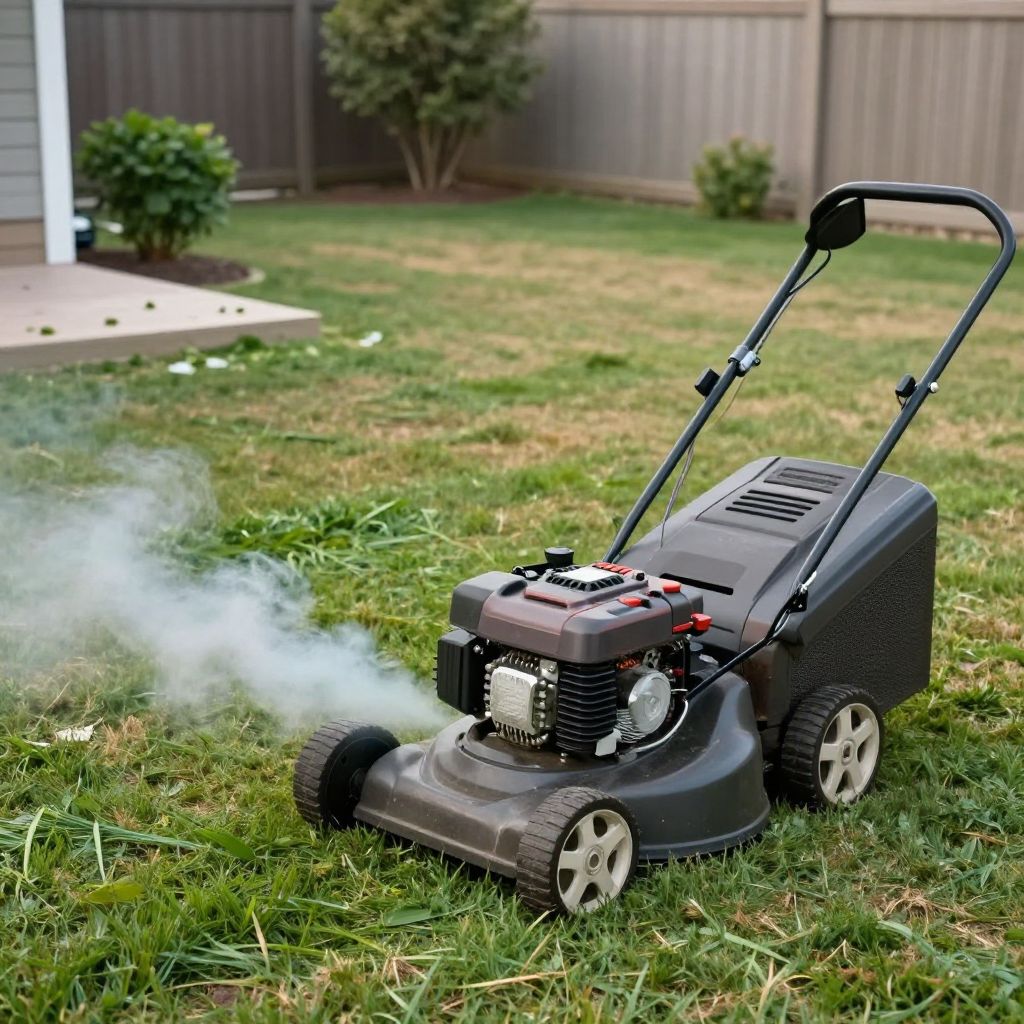
Why is my lawn mower smoking? In most cases, the answer is simple: too much oil, oil in the wrong place, a clogged engine, or a hot engine that’s been pushed too hard. Smoke can look alarming, but many causes are fixable if you stop the mower quickly and inspect it before running it again.
The color of the smoke matters. Blue or white smoke often points to oil burning, while black smoke usually means the engine is running too rich on fuel. A little smoke after maintenance or tipping the mower may clear up, but persistent smoke needs attention.
Why is my lawn mower smoking?
A lawn mower usually smokes because oil, fuel, or debris is affecting the engine’s combustion or cooling. The most common causes are overfilled crankcase oil, mowing on steep slopes, a dirty air filter, stale fuel, a clogged deck, or overheating from restricted airflow. Stop the engine, let it cool, and check the basics before using it again.
What the smoke color is telling you
Blue or white smoke
Blue or white smoke usually means the engine is burning oil. This often happens after the mower has been tipped the wrong way, stored on its side, or overfilled with oil. It can also happen if worn engine parts are letting oil enter the combustion chamber.
Black smoke
Black smoke usually means too much fuel and not enough air. A dirty air filter, stuck choke, or carburetor issue can cause this. The engine may also run rough, lose power, or smell strongly of gasoline.
Light smoke after maintenance
If you just changed the oil, cleaned the mower, or tipped it for blade access, a small amount of smoke may burn off as residue clears. This should fade fairly quickly. If it does not, treat it as a problem rather than normal behavior.
Common causes of a smoking lawn mower
1. Too much oil in the engine
Overfilling the crankcase is one of the most common reasons a mower smokes. Extra oil can splash into the cylinder or air intake and burn when the engine runs.
- Check the oil level with the mower on level ground.
- Drain excess oil if the dipstick shows above the full mark.
- Wipe away any oil on the engine housing before restarting.
Tip: Always check the owner’s manual for the correct oil capacity, because small engines vary.
2. Tipping the mower the wrong way
If you tilt a mower carburetor-side down, oil can flow into the air filter, carburetor, or cylinder. The result is smoking when you restart it. This is especially common after blade cleaning or underside maintenance.
- Let the mower sit upright for a while before starting.
- Check the air filter for oil saturation.
- If oil has entered the combustion chamber, run the mower briefly in a well-ventilated area and watch whether the smoke clears.
3. Dirty or clogged air filter
A clogged air filter restricts airflow, which can make the engine run rich and smoke. Grass dust, pollen, and dry debris can build up quickly during mowing season, especially in dusty or dry conditions.
- Remove the filter and inspect it.
- Replace paper filters if they are dirty or oily.
- Clean foam filters according to the manual, then let them dry fully before reinstalling.
4. Stale fuel or carburetor problems
Old gasoline can gum up the carburetor and affect the fuel-air mix. This may cause black smoke, rough idling, hard starting, or surging. Fuel left in the tank for long periods is a frequent issue at the end of the mowing season.
- Drain stale fuel if it smells sour or has been stored too long.
- Refill with fresh gasoline suited to your mower and local conditions.
- Check for a stuck choke or dirty carburetor if the smoke continues.
5. Mowing too long or in thick, wet grass
Heavy grass can strain the engine and reduce airflow around the deck. When the mower works harder than usual, it can overheat and smoke, especially if the blade area is packed with clippings.
- Raise the cutting height for very tall grass.
- Cut only one-third of the grass blade at a time when possible.
- Wait for wet grass to dry before mowing if conditions allow.
6. Clogged mower deck or cooling fins
Grass buildup under the deck and around the engine can trap heat. Overheating may not always produce dramatic smoke, but it can shorten engine life and make the mower smell hot or burnt.
- Disconnect the spark plug before cleaning.
- Scrape off packed grass from under the deck.
- Brush debris away from engine cooling fins and air passages.
7. Engine wear or mechanical damage
If the mower smokes even after you correct oil level, fuel, and airflow, the engine may have worn piston rings, valve issues, or other internal damage. This is more likely on older mowers or machines that have been poorly maintained.
Persistent blue smoke, oil consumption, and loss of power are warning signs that the problem may be beyond a simple tune-up.
What to do right away if your mower starts smoking
- Shut the mower off immediately. Do not keep running it while smoke is coming from the engine.
- Let it cool completely before touching hot parts.
- Check the smoke color and smell.
- Inspect the oil level on level ground.
- Look at the air filter for dirt or oil.
- Check for grass buildup under the deck and around cooling areas.
- Review recent maintenance, especially oil changes and tipping the mower.
How to fix the most common smoking problems
If the mower has too much oil
Drain the excess oil until the level is correct. Use the dipstick as directed in the manual, and recheck after the mower has sat level for a few minutes. Clean any oil residue from the engine exterior.
If the air filter is dirty
Replace or clean the filter. A fresh filter often improves engine breathing immediately and reduces black smoke. If the filter is soaked with oil, replacing it is usually the best choice.
If fuel is stale
Empty the tank and carburetor if needed, then refill with fresh fuel. If the mower still smokes or runs unevenly, the carburetor may need cleaning or adjustment by a qualified repair shop.
If the mower was tipped incorrectly
Set it upright, clean any oil from the air filter and spark plug area, and allow time for excess oil to drain away from the cylinder. A short run may clear light smoke, but heavy smoke that continues means there may be more than just tipped oil.
If the engine is overheating
Clean the deck, remove clippings from vents and fins, and avoid mowing in extreme heat or in grass that is too tall and dense for one pass. Sharpening the blade can also help the mower cut more efficiently and reduce strain.
How to prevent lawn mower smoking in the future
- Check oil level before each mowing session or at regular intervals.
- Use the mower only on the side recommended by the manufacturer when tipping it.
- Clean the deck after mowing, especially in damp or fast-growing grass.
- Replace or clean the air filter as part of routine maintenance.
- Use fresh fuel and avoid leaving gasoline in the tank for long storage periods.
- Store the mower in a dry place and follow seasonal maintenance steps before spring use.
When to stop troubleshooting and get help
Call a small-engine repair technician if the mower keeps smoking after you correct the oil level, clean the filter, and remove debris. You should also get help if you notice metal noises, major oil leaks, strong burning smells, or smoke that gets worse instead of better.
Do not keep running a smoking mower. Continuing to use it can turn a minor maintenance issue into a costly engine repair.
Conclusion
If you’re asking, “Why is my lawn mower smoking?” start with the simplest checks: oil level, air filter, fuel freshness, and grass buildup. Most smoking problems are caused by maintenance issues you can fix yourself. If the smoke continues after those steps, the engine may need professional attention.
For more mower maintenance help, you may also want to read about what kind of oil for a lawn mower and what type of oil for a lawn mower.