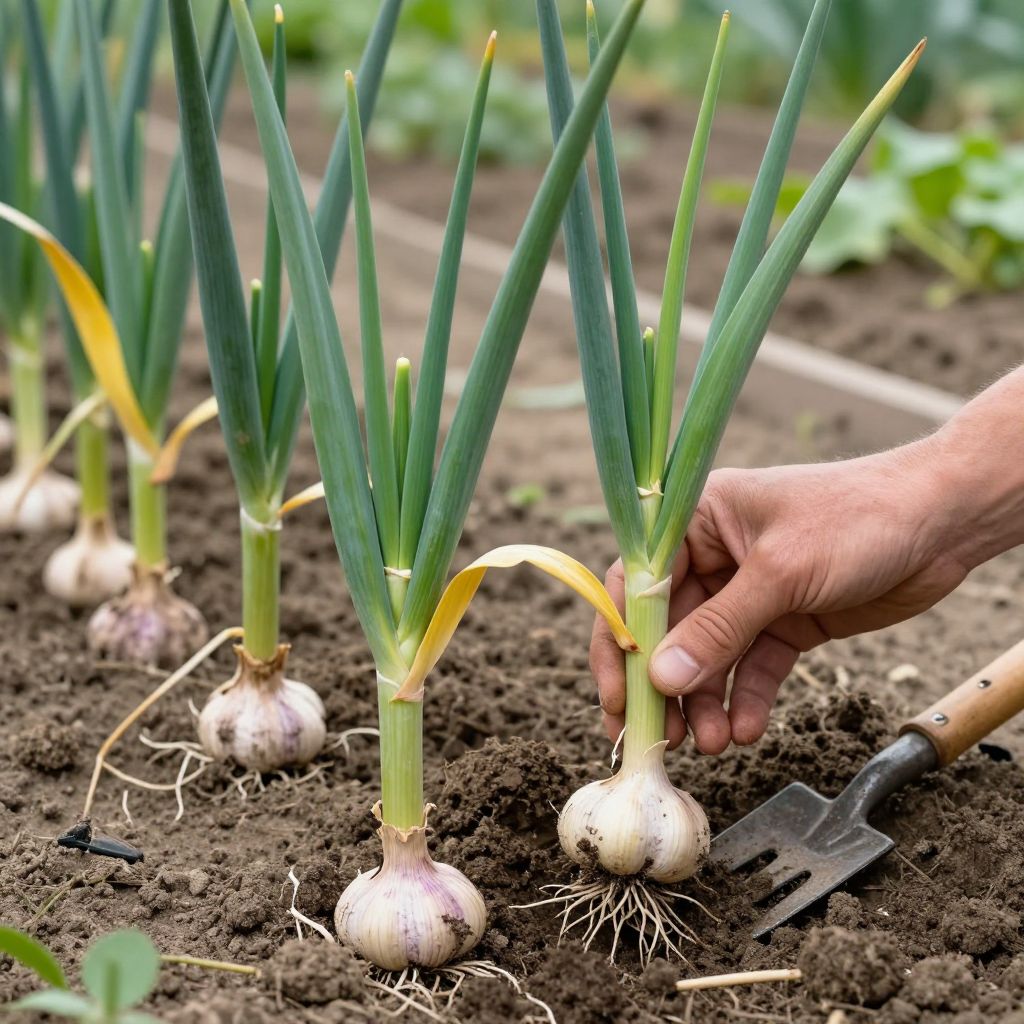
Wondering when to pick garlic so the bulbs are full-sized but still store well? The right harvest window is a balance: wait too long and the cloves may split or the bulbs may start to rot; dig too early and you’ll get small, underdeveloped heads.
Garlic is usually ready in early to midsummer, depending on your climate, variety, and planting time. The best clue is the plant itself: watch the leaves, check the bulbs, and harvest when the lower leaves have browned while several upper leaves are still green.
When to pick garlic?
Pick garlic when about one-third to one-half of the leaves have turned brown, but the top leaves are still mostly green. This usually means the bulbs have finished sizing up, the wrappers are intact, and the cloves are ready for curing and storage. A few test digs are the most reliable way to confirm timing.
How to tell garlic is ready to harvest
Garlic does not ripen all at once, so you need to read the plant rather than rely on the calendar alone. Weather, soil, and variety all affect harvest timing.
Leaf color is the best signal
Each green leaf supports one wrapper layer on the bulb. When the lower leaves die back, the bulb is nearing maturity.
- Too early: most leaves are green, bulbs are small, and wrappers are thin.
- Ready: the bottom 3–5 leaves are brown or yellow, and the upper leaves are still green.
- Too late: most leaves are brown, bulbs may split, and storage life drops.
Hardneck vs. softneck timing
Hardneck garlic often sends up a flower stalk, or scape, and is usually harvested a bit earlier than softneck types. Softneck garlic often keeps more green foliage at harvest and can store longer when cured well.
If you are unsure, dig one sample bulb. If the cloves are well formed and the wrapper skins are papery, you are close. If the bulb is still loose or the cloves are tiny, give the crop more time.
What month is garlic usually harvested?
In many temperate climates, garlic is harvested from late spring through midsummer, often around June or July in the Northern Hemisphere. Warmer regions may finish earlier, while cooler areas may run later. The exact month depends on when you planted, how cold your winter was, and how quickly spring warmed up.
Rather than follow a fixed date, start checking plants once the lower leaves begin to yellow. In rainy weather, check more often because mature bulbs can deteriorate quickly in wet soil.
Step-by-step: how to harvest garlic
Harvesting gently matters. Bruised bulbs do not cure as well and are more likely to rot in storage.
- Stop watering about a week before harvest if the weather is dry enough to allow it. This helps the soil dry slightly and makes lifting easier.
- Choose a dry day if possible. Wet bulbs and muddy skins take longer to cure.
- Loosen the soil with a garden fork or trowel a few inches away from the bulb.
- Lift the plant carefully by hand or by the leaves only if the soil is loose enough.
- Brush off excess soil gently. Do not wash the bulbs unless they are heavily caked and you can dry them immediately.
- Keep the leaves and roots attached for curing.
Avoid pulling hard on the stems. Garlic tops can snap, leaving the bulb behind or damaging the neck, which shortens storage life.
What happens if you pick garlic too early or too late?
Picking too early
Early-harvested garlic often has smaller bulbs, thinner skins, and less developed cloves. It can still be eaten fresh, but it usually will not store as long as fully mature garlic.
Picking too late
Overripe garlic may split open in the ground, exposing cloves to moisture and disease. The wrappers can become sparse, and the bulb may not cure into a tight, long-lasting head.
If you miss the ideal window by a little, don’t panic. Garlic that is a bit late is often still usable if the bulbs remain firm and unbroken. The main risk is reduced storage quality, not immediate loss of the crop.
How to cure garlic after harvesting
Curing is the drying period that helps garlic store well. Freshly dug bulbs are not ready for long-term storage until the outer skins dry and the necks tighten.
- Lay bulbs in a single layer or hang them in bunches in a warm, dry, shaded, well-ventilated place.
- Keep them out of direct sun, which can scald bulbs and reduce quality.
- Allow 2–4 weeks for curing, depending on humidity and airflow.
- When fully dry, trim roots and tops, or braid softneck garlic if you prefer.
Good airflow is essential. A garage, covered porch, shed, or airy indoor room often works well if temperatures stay moderate and the space stays dry.
Growing conditions that affect harvest timing
Garlic performs best in loose, fertile soil with excellent drainage and full sun. Poor growing conditions can delay maturity or shrink bulbs, which changes when you should harvest.
Soil and compost
Garlic prefers soil that drains well and is enriched with compost before planting. Heavy, waterlogged soil can cause rot and make bulbs harder to size up properly. If your soil is clay-heavy, raised beds or broad mounded rows can help.
Watering
Garlic needs steady moisture during active growth, especially in spring, but too much water near harvest can encourage rot. As the leaves begin to die back, reduce watering and let the soil dry more between rains if possible.
Sunlight
Full sun supports stronger leaf growth, and more leaf growth generally means larger bulbs. In partial shade, garlic may stay healthy but often matures more slowly and produces smaller heads.
Common garlic harvest problems and fixes
The tops are still green, but the bulbs look large
Do a test dig. Sometimes the plant looks leafy even after the bulb is ready. If the wrappers are papery and the cloves are clearly formed, you can harvest.
The leaves are browning fast after a heat wave
Hot weather can rush maturity. Check bulbs promptly, especially if the lower leaves have already dried down. A sudden change in weather can shorten your harvest window.
The bulbs split in the ground
This usually means they stayed in the soil too long after maturity or received uneven moisture. Harvest the remaining bulbs sooner and improve drainage or watering consistency next season.
The bulbs are small
Small bulbs often point to crowding, poor soil fertility, shallow planting, or harvesting too early. Next season, give cloves enough spacing, add compost, and keep weeds down so the plants can size up fully.
Should you harvest garlic scapes before picking bulbs?
If you are growing hardneck garlic, removing scapes can help the plant direct more energy into bulb development. Scapes are usually cut when they curl once or twice, while still tender. This does not change the harvest date dramatically, but it can improve bulb size.
Leave a few plants uncut if you want to compare results or if you are saving seed garlic. Just remember that scapes are not the harvest cue for the bulb itself; leaf dieback still tells you when to pick garlic.
How to store garlic after curing
Once cured, store garlic in a cool, dry, dark place with good air circulation. Avoid sealed plastic bags, damp basements, and warm kitchens, which can shorten storage life.
- Keep bulbs intact until you need them.
- Store in mesh bags, baskets, or braided bunches.
- Check occasionally for soft spots, mold, or sprouting.
Softneck garlic usually stores longer than hardneck garlic, but both types last best when cured thoroughly and kept dry.
Quick harvest checklist
- Lower leaves are brown or yellow.
- Upper leaves are still partly green.
- Bulbs feel full when you sample one.
- Soil is dry enough to dig cleanly.
- You have a shaded, airy place ready for curing.
If you want to plan next season as well as this one, it can help to read more about planting timing in your region and whether spring planting is a workable backup option. You may also find it useful to compare local guidance on when to plant garlic in Ohio or learn more about planting garlic in the spring.