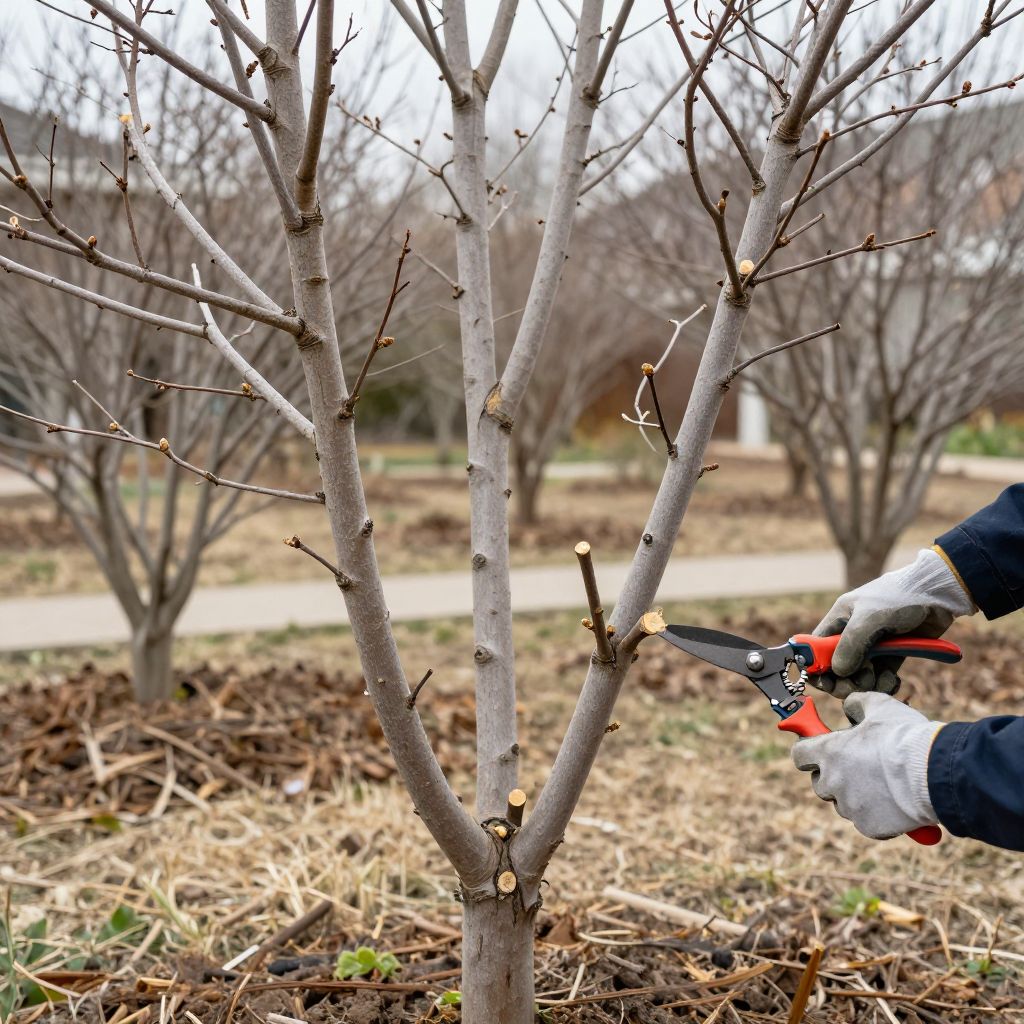
Wondering when to prune crape myrtle without ruining the bloom display? The short answer is: prune in late winter to very early spring, before new growth starts, and only if the plant truly needs it.
That timing helps you avoid removing the flower buds that form on new wood, while also making it easier to see the branch structure. The goal is not to “top” the tree, but to shape it, remove problems, and keep it healthy.
When To Prune Crape Myrtle?
The best time to prune crape myrtle is late winter to early spring, after the coldest weather has passed but before buds break. In most climates, that means roughly February through March, though local timing depends on your weather. Avoid heavy pruning in fall, and never prune so late in spring that you remove active new growth.
Why timing matters so much
Crape myrtles bloom on new growth, so pruning at the right time can encourage a strong flush of fresh shoots and flowers. If you prune too early in fall, tender new growth may be damaged by cold. If you prune too late in spring, you can reduce flowering and stress the plant.
Good timing also makes it easier to judge what should stay and what should go. Without leaves in the way, you can spot crossing branches, weak stems, and dead wood much more clearly.
What to prune on a crape myrtle
Start with the branches that are clearly a problem. A crape myrtle usually needs light, selective pruning rather than a hard cutback.
Remove these first
- Dead, damaged, or diseased wood
- Branches that rub or cross
- Suckers from the base or roots
- Small inward-growing shoots that crowd the center
- Weak stems that will not support a good shape
Be cautious with these cuts
- Large heading cuts that leave stubs
- Removing too much of the canopy at once
- Cutting the tree into an unnatural “lollipop” shape
- Topping the main trunks
Avoid topping crape myrtle. That harsh practice creates weak, crowded growth and can lead to more breakage, more suckers, and a less attractive plant over time.
How to prune crape myrtle step by step
Use clean, sharp hand pruners for small stems, loppers for medium stems, and a pruning saw for larger branches. Make cuts just outside the branch collar, not flush against the trunk.
- Inspect the plant from a distance. Look for the overall shape and decide whether it needs only cleanup or a little thinning.
- Remove dead and damaged wood first. Cut back to healthy tissue or to the branch origin.
- Take out crossing or rubbing branches. Choose the better-placed branch and remove the other.
- Thin crowded shoots. Open the center slightly so air and light can move through the canopy.
- Shorten overly long side shoots if needed. Make selective cuts back to a side branch or bud, not random stubs.
- Clean up suckers at the base. Remove them as low as possible.
If the tree is young, focus on structure. Choose a few strong trunks and remove weak, crowded, or awkward stems so the plant develops a sturdy framework.
How much should you prune?
For most established crape myrtles, light to moderate pruning is enough. You may remove dead wood, a few crossing branches, and some crowded growth without changing the plant’s basic form. If the plant is overgrown, spread major pruning over more than one season instead of removing too much at once.
As a general rule, less is usually better. A crape myrtle that is properly sited and healthy often needs only minimal annual pruning.
Best pruning timing by season
Late winter to early spring
This is the ideal window for most pruning. The plant is dormant or nearly dormant, and you can see the branch structure clearly. In warmer regions, this may be earlier than in colder areas.
Summer
Summer pruning should be limited to removing broken limbs, spent flower clusters if you prefer a tidier look, or obvious suckers. Heavy pruning in summer can reduce flowering and encourage a flush of soft growth.
Fall
Fall is not a good time for major pruning. New growth stimulated by cuts may not harden before cold weather arrives, especially in cooler climates.
Common pruning mistakes to avoid
Many crape myrtles are damaged more by pruning style than by pruning itself. These mistakes are especially common:
- Topping the trunks or main branches
- Cutting back to random stubs instead of to a proper branch junction
- Pruning too heavily every year
- Removing all lower branches and creating a weak, top-heavy plant
- Using dull tools that crush stems instead of making clean cuts
Another common issue is pruning on a fixed calendar without checking the plant. If your crape myrtle is small, young, or naturally well shaped, it may need very little pruning at all.
How to prune a crape myrtle tree versus a shrub
Crape myrtles can be grown as multi-trunk small trees or as shrubby forms, depending on the variety and how they were trained. The pruning approach should match the plant’s intended shape.
Tree form
Keep a few strong trunks and gradually remove low shoots and weak interior growth. The goal is a balanced canopy with good air movement beneath it.
Shrub form
Allow more stems to remain from the base, but still remove crowded, crossing, or weak shoots. Thin rather than shear whenever possible.
If the plant has been neglected, you may need to do a gradual renovation over two or three seasons. That is safer than trying to force a drastic shape in one year.
What if your crape myrtle is overgrown?
An overgrown crape myrtle can usually be improved, but it takes patience. Start by removing dead wood and the worst crossing branches. Then reduce height or spread only as needed, making selective cuts to side branches rather than chopping the plant back uniformly.
If the plant is very large, consider whether it is simply in the wrong place. A crape myrtle that has outgrown its site may be better managed with gradual pruning than with repeated hard cuts.
Pruning and flowering: what to expect
Pruning at the right time can help encourage vigorous new growth, which is where flowers form. However, pruning too hard can delay bloom or reduce the number of flower clusters for that season.
If your goal is maximum bloom, keep pruning light. Focus on cleanup and shaping rather than shortening every branch.
After-pruning care
After pruning, water the plant only if the soil is dry and the weather is warm and dry. Crape myrtles generally prefer well-drained soil and full sun, and they do not like staying wet for long periods.
A thin layer of compost or organic mulch can help conserve moisture and improve soil over time, but keep mulch a few inches away from the trunk. Avoid piling mulch against the bark.
- Check for new suckers during the growing season
- Watch for aphids, which can cause sticky honeydew and sooty mold
- Inspect for powdery mildew in humid or crowded plantings
- Remove any broken shoots after storms
Signs your crape myrtle needs pruning now
Not every crape myrtle needs an annual pruning session. Prune when you see a real reason to do so:
- Dead or damaged branches
- Branches rubbing together
- Too much crowding in the canopy
- Low suckers at the base
- Poor structure on a young plant
- Storm damage
If none of these are present, you may only need to remove spent seed heads or leave the plant alone until next year.
Final tip for healthy crape myrtles
When deciding when to prune crape myrtle, think “late winter, light touch, selective cuts.” That approach protects flowering, improves plant health, and keeps the natural form intact. If you are unsure, do less rather than more, and let the plant guide your next cut.
For more pruning guidance, you may also find these related articles helpful: when to prune crepe myrtle and when to prune hibiscus.