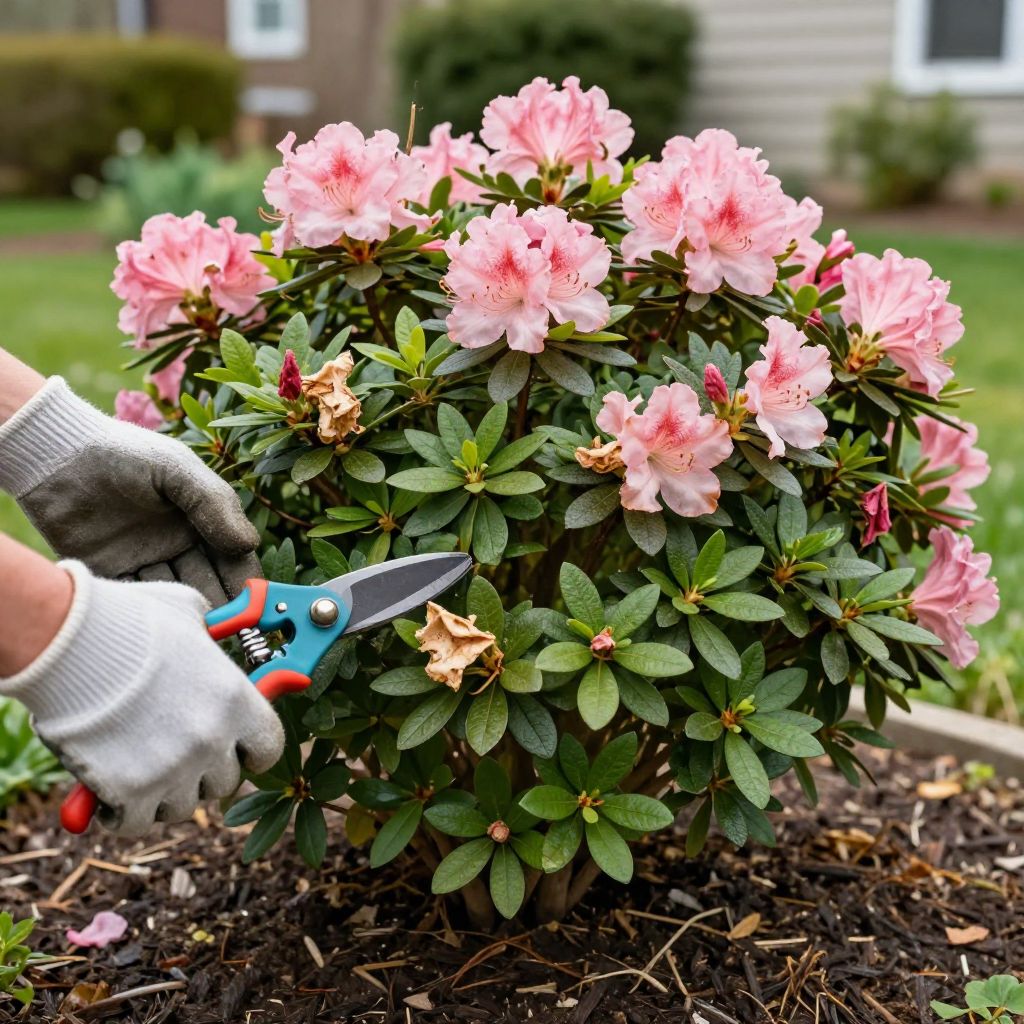
Wondering when to trim azaleas without losing next spring’s flowers? The short answer is to prune them right after they finish blooming, while the plant is still actively growing. That timing gives azaleas time to set new buds for next year before cold weather arrives.
Most azaleas need only light shaping, not hard pruning. If you trim too late in summer, fall, or winter, you may remove flower buds and reduce the bloom display for the following season.
When to trim azaleas?
The best time to trim azaleas is immediately after flowering, usually in late spring or early summer, depending on your climate and the variety. Prune before midsummer if possible so the plant has time to grow new shoots and form flower buds for next year. Avoid major pruning in fall or winter.
Why timing matters for azalea pruning
Azaleas set next year’s flower buds on the growth they make after blooming. If you prune after those buds have formed, you’ll cut away the flowers you were hoping to enjoy. That’s why timing is more important with azaleas than with many other shrubs.
If your azalea blooms in spring, treat pruning as a post-bloom task. If you have a reblooming type, trim lightly after the main flush and again only if needed, being careful not to remove too much new growth.
What happens if you prune at the wrong time?
- Late pruning can remove flower buds for next season.
- Hard pruning in summer may stress the shrub during heat or drought.
- Fall pruning can encourage tender new growth that is damaged by frost.
- Winter pruning often means you are cutting off already-formed buds.
How much should you trim?
For most home gardens, azaleas only need light shaping. Remove dead, damaged, crossing, or weak branches first, then shorten a few long shoots to keep the shrub balanced. A gentle trim is usually better than reshaping the plant all at once.
Rule of thumb: if the azalea is healthy and only slightly overgrown, remove no more than about one-third of the plant in a season. For older, neglected shrubs, spread renovation pruning over two or three years.
Signs your azalea needs pruning
- It has dead or broken stems.
- The center is crowded and air movement is poor.
- Branches are rubbing or crossing.
- The shrub is too wide for its space.
- Flowering has moved mostly to the outer tips.
Step-by-step: how to prune azaleas
- Wait until flowering ends. Trim after the blooms fade, before midsummer if you can.
- Inspect the shrub. Look for dead wood, weak shoots, and branches that spoil the shape.
- Use clean, sharp tools. Hand pruners work for small stems; loppers help with thicker branches.
- Remove dead or diseased wood first. Cut back to healthy tissue or to the branch collar.
- Thin crowded areas. Take out a few stems at their base to improve light and airflow.
- Shorten long shoots selectively. Cut just above a leaf node or side branch to encourage bushier growth.
- Step back often. Check the overall shape as you work so you do not overtrim one side.
Best tools for the job
- Hand pruners for stems up to about pencil thickness
- Loppers for thicker branches
- Pruning saw for older woody stems
- Gloves to protect your hands from scratchy growth
How to prune overgrown azaleas
If an azalea has become leggy or too large, resist the urge to shear it into a tight ball. Shearing often creates a dense outer shell of growth and a bare interior. A more natural thinning cut keeps the shrub healthier and more attractive.
For severe overgrowth, use renewal pruning gradually. Remove a few of the oldest stems near the base each year, then let the plant regrow. This preserves more blooms than cutting the whole shrub back at once.
When hard pruning is worth considering
Hard pruning can make sense if the shrub is badly misshapen, damaged, or crowding a walkway. Even then, do it only if the plant is vigorous and in the right season. After hard pruning, expect fewer blooms for a year or two while the shrub recovers.
Common mistakes to avoid
- Pruning too late in the season and removing next year’s buds.
- Shearing repeatedly instead of making selective cuts.
- Cutting too much at once, which can weaken the plant.
- Using dull or dirty tools, which can tear stems and spread disease.
- Ignoring dead wood, pests, or disease symptoms while shaping the shrub.
What about azaleas in containers?
Potted azaleas follow the same pruning timing as garden azaleas: trim after flowering. Because container plants dry out faster and can be more stressed, keep pruning light and avoid major cuts during hot weather. Make sure the pot drains well, since soggy roots can make recovery slower.
Growing conditions that affect pruning success
Healthy azaleas bounce back better from pruning when they are planted in the right conditions. They prefer acidic, well-drained soil, consistent moisture, and dappled light or morning sun with afternoon shade in warmer climates. A stressed shrub should be pruned only lightly until it recovers.
Support good regrowth after pruning
- Water deeply during dry spells, especially after pruning.
- Mulch around the root zone, but keep mulch a few inches away from the stems.
- Avoid heavy feeding right after severe pruning unless your soil test or local guidance suggests it.
- Protect newly exposed branches from harsh afternoon sun if the shrub was previously shaded.
Watch for pests and disease while you prune
Pruning is a good time to inspect azaleas for lace bugs, scale, leaf spots, or dieback. Remove obviously diseased twigs and discard them rather than composting if disease is suspected. Clean tools between cuts if you are working on damaged wood.
If you notice widespread dieback, yellowing from poor drainage, or repeated leaf spotting, pruning alone will not solve the problem. Check soil moisture, drainage, and light levels, because stressed azaleas are more likely to struggle after trimming.
Can you trim azaleas after they bloom every year?
Yes, and that is often the easiest routine. A light annual trim after flowering helps maintain shape, encourages denser growth, and prevents the shrub from becoming woody and sparse. The key is to keep the cuts modest and timely.
If your azalea is already compact and blooming well, you may only need to remove spent flowers, dead stems, and a few wayward branches. Not every azalea needs a full pruning session each year.
Quick pruning checklist
- Trim right after bloom.
- Remove dead, damaged, or crossing stems first.
- Thin crowded growth for air movement.
- Shape lightly rather than shearing heavily.
- Stop pruning by midsummer in most climates.
- Water and mulch after pruning if the weather is dry.
Conclusion
If you want the best bloom display next year, remember this simple rule: trim azaleas right after they flower. Make clean, selective cuts, avoid late-season pruning, and keep the plant healthy with good drainage and steady moisture. If you’d like to fine-tune your shrub care, see related guidance on when to prune azaleas and when to fertilize azaleas.