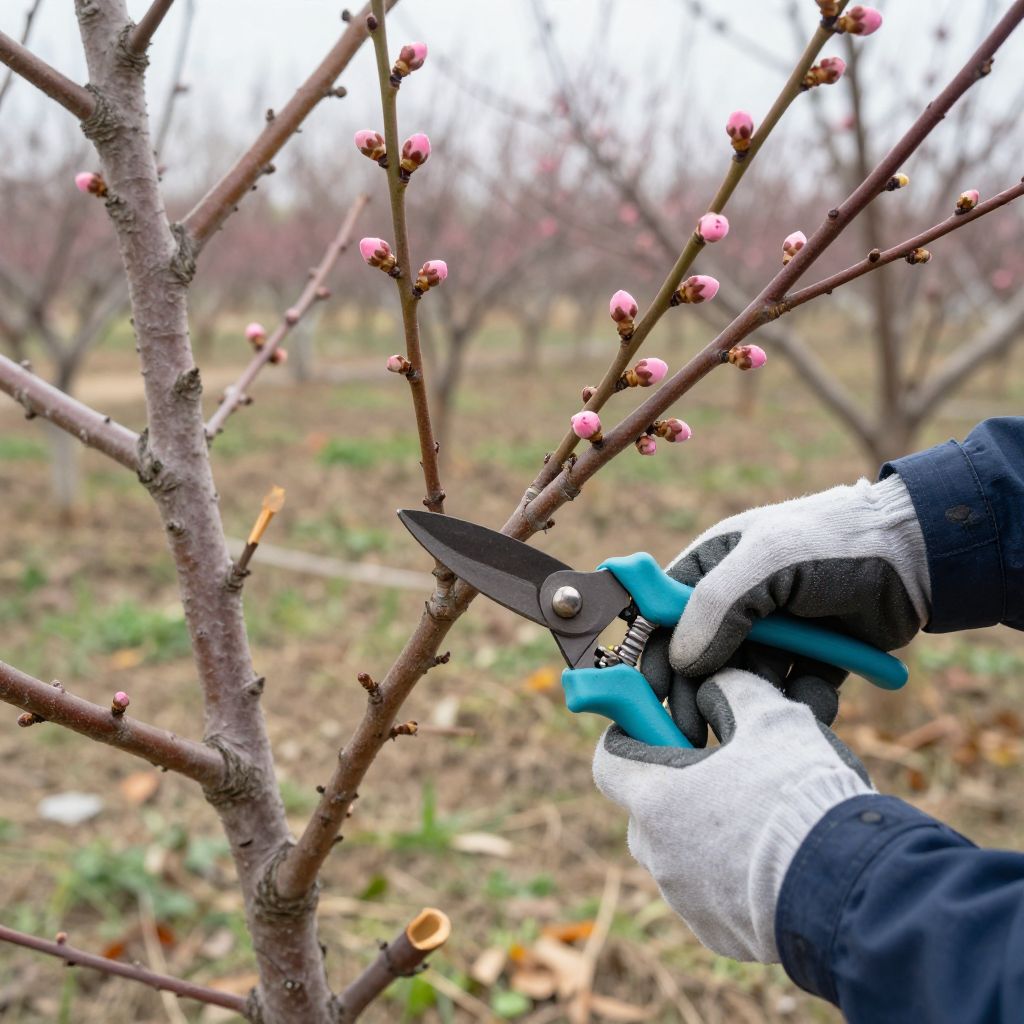
If you’re wondering when to prune peach trees, timing matters as much as technique. Prune at the wrong time and you can reduce fruiting, invite disease, or stimulate tender growth that winter can damage.
The good news is that peach trees are one of the fruit trees that respond well to regular pruning. With the right season, a few basic cuts, and a focus on open structure, you can help your tree stay healthy and produce better-quality peaches.
When to prune peach trees?
The best time to prune peach trees is usually in late winter or very early spring, after the worst cold has passed but before buds fully open. In mild climates, some light summer pruning can also help control size and improve sunlight, but avoid heavy pruning in fall or during freezing weather.
Why pruning timing matters
Peach trees fruit on one-year-old wood, so pruning is not just about shaping the tree. It helps you renew fruiting shoots, keep the canopy open to light, and reduce disease pressure.
Timing also affects how the tree responds. A hard prune in late winter encourages vigorous new growth, while pruning too late in the season can remove developing fruiting wood or expose fresh cuts to stress.
What happens if you prune at the wrong time?
- Too early in winter: cuts may be damaged by hard freezes.
- Too late in spring: you may remove flower buds or young fruit.
- In fall: pruning can stimulate growth that is vulnerable to winter injury.
- During wet weather: fresh wounds may be more prone to disease spread.
Best season for pruning peach trees
Late winter to early spring
This is the main pruning window for most peach trees. Aim for a period when the tree is still dormant or just beginning to wake up, but before active growth starts in earnest.
In many regions, that means sometime from late winter into early spring, depending on local climate. If your area has severe winters, wait until the coldest weather has passed.
Summer pruning
Light summer pruning can be useful after harvest or during active growth if you need to reduce height, remove water sprouts, or improve light penetration. Keep it modest, because heavy summer pruning can reduce the tree’s energy reserves.
Summer pruning is especially helpful if your peach tree is getting too large for easy picking or if the center of the canopy is shading out fruiting wood.
When not to prune
- Late fall: avoid pruning just before winter.
- During active bloom: you may remove fruiting wood and disturb pollinators.
- In wet, rainy periods: especially if bacterial diseases are a concern in your area.
- When a tree is stressed: drought, transplant shock, or severe pest damage are not ideal times for heavy pruning.
How to prune a peach tree step by step
Peach trees are usually trained to an open-center or vase shape. This keeps the middle open to sunlight and air, which is important for fruit quality and disease prevention.
- Start with clean tools. Use sharp bypass pruners for small shoots and a pruning saw or loppers for larger branches.
- Remove dead, damaged, or diseased wood first. Cut back to healthy tissue.
- Take out branches growing inward. The center should remain open, not crowded.
- Remove crossing or rubbing branches. These can wound each other over time.
- Keep scaffold branches well spaced. Choose 3 to 5 main branches that angle outward from the trunk.
- Shorten vigorous shoots as needed. This helps balance growth and encourages fruiting wood.
- Step back often. Check the overall shape before making the next cut.
How much should you remove?
For established peach trees, moderate annual pruning is usually better than occasional severe pruning. A common approach is to remove enough wood to keep the canopy open and manageable without stripping the tree bare.
If the tree is very overgrown, spread major renovation over more than one season when possible. Heavy one-time pruning can trigger a flush of weak, upright growth.
Pruning young peach trees
Young trees need training more than heavy fruit production. In the first few years, your goal is to build a strong framework with good spacing and a low, manageable canopy.
After planting, you may need to head back the main stem and select scaffold branches, depending on the tree’s form and how it was started in the nursery. If you are unsure, remove only clearly poor growth and shape gradually.
Training tips for young trees
- Choose branches with wide angles rather than narrow, weak crotches.
- Keep the center open from the beginning.
- Do not let the tree become too tall too quickly.
- Encourage branches that are easy to reach for future harvest and thinning.
Pruning mature peach trees
Mature trees need yearly maintenance to keep fruiting wood productive. Peach trees naturally push vigorous growth, so if you skip pruning, the canopy can become dense, shaded, and harder to harvest.
Focus on renewing fruiting shoots, removing crowded growth, and keeping the tree at a height you can manage safely from the ground or a stable step stool.
Signs your mature tree needs pruning
- Fruit is smaller or less colorful because the canopy is too dense.
- Branches are crowded and crossing.
- The center of the tree is shaded and unproductive.
- Harvesting requires too much ladder work.
- There is a lot of upright, leafy growth but not much fruiting wood.
Tools and safety for peach tree pruning
Good tools make cleaner cuts and reduce damage to the tree. Clean, sharp blades are especially important because torn cuts heal more slowly.
- Bypass pruners for shoots and small branches
- Loppers for medium branches
- Pruning saw for larger limbs
- Gloves and eye protection for safety
Disinfect tools between trees if you suspect disease, and wipe blades clean after use. If you are cutting out obviously diseased wood, cleaning tools as you go is a smart habit.
Common pruning mistakes to avoid
- Topping the tree: this creates weak, crowded regrowth.
- Leaving too many branches in the center: poor airflow increases disease risk.
- Pruning too lightly every year: the tree can become overgrown and less productive.
- Pruning too heavily at once: this can cause excessive water sprouts.
- Cutting in the wrong season: timing affects both health and fruiting.
How pruning affects pests and diseases
Open, well-pruned peach trees dry faster after rain or dew, which helps reduce disease problems. Good airflow also makes it easier to inspect for pests and spot trouble early.
Peach trees can be affected by issues such as peach leaf curl, brown rot, borers, and aphids, depending on your region. Pruning alone will not prevent these problems, but it can make management easier by improving light and air movement.
Pruning and disease prevention
- Remove dead wood and mummified fruit promptly.
- Do not leave stubs that can die back and become entry points for disease.
- Keep the canopy open so leaves and fruit dry more quickly.
- Dispose of diseased material rather than composting it if disease pressure is high.
After-pruning care
Once you finish pruning, the tree usually needs little immediate intervention beyond normal care. Water during dry spells, especially if the tree is young or newly established, and keep the root zone mulched without piling mulch against the trunk.
Avoid overfertilizing right after heavy pruning. Excess nitrogen can push soft, leafy growth instead of balanced fruiting wood.
Watch for these follow-up issues
- Rapid upright shoots, often called water sprouts
- Sunburn on exposed limbs after a very heavy prune
- Dieback from cuts made too close to the trunk or too far out as stubs
- Reduced fruiting if too much one-year-old wood was removed
Quick timing guide by climate
Because peach trees respond to local weather, use the season as a guide rather than a fixed calendar date.
- Cold-winter areas: prune in late winter after the coldest part of winter has passed.
- Mild winter areas: prune in late winter or very early spring before strong growth begins.
- Areas with wet springs: prune during a drier window when possible to reduce disease spread.
- Very vigorous trees: add a light summer touch-up if needed to control height and shade.
Conclusion
If you want the simplest answer to when to prune peach trees, choose late winter to early spring for the main job, then use light summer pruning only if needed. Keep the center open, remove crowded and damaged wood, and avoid heavy pruning in fall.
For more fruit tree care, you may also find it helpful to read about when to prune blueberry bushes and when to prune hibiscus plants.